Friday, December 2, 2011

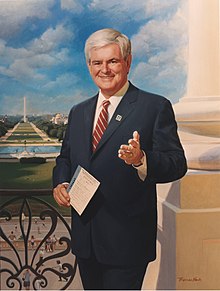
Newt Gingrich's Economic Plan In One Syllable: Ugh.


I think it's about time we take a good look at Newt Gingrich's plan to reform welfare entitlements through "promoting growth and innovation", detailed in this 48-page white paper.

First and foremost: Gingrich (or his writers) use very idyllic language which sounds very plausible. It's the same sort of language Gingrich employs in debates with great success. I ask the reader to ignore it, and focus only on the particulars of his plan. In other words, I want you to be Joe Friday for the next several minutes.

Second, the reader will notice something which is almost laughable: The white paper uses the words "growth" and "innovation" dozens of times in 48 pages, but gives no details about how such "growth and innovation" would occur. It's a meaningless catchphrase, like "Hope and Change".

Third, Newt Gingrich firmly cements his opposition to cuts in government spending in the introduction:
The first path is the "fantasy" option: Pretend that everything is working just fine, and fundamental change is unnecessary (...) The second path is the "Austerity" option: Conceding that we will not become as prosperous and secure as we once thought we would, so we should be prepared to settle for less (...) The third path is what this paper will address: Securing Americans' retirement, expanding world-class healthcare for everyone, and lifting millions of Americans out of poverty through growth and innovation.
(Emphasis mine)

To review: According to Gingrich, budget-cutting (otherwise known as "austerity") is a defeatist attitude; and one of his goals is "expanding healthcare for everyone". Note again that Newt camouflages his intentions by mixing his ideas with the language of fiscal conservatism.

The white paper is organized into three "Steps", which I will also use to analyze the proposal.

Step 1: Social Security Personal Accounts. Gingrich is not alone in championing the Chilean model for Social Security reform, already implemented in part of Texas- in fact, every Republican candidate except Mitt Romney is championing exactly this reform. Newt does, however, provide a fascinating history of the Chilean system, and I'm highly impressed by the thoroughness and accuracy of this section of the white paper.

Step 2: Fundamentally Reforming The Welfare Empire. On welfare, we encounter some problems. Gingrich provides excellent and indisputable background material about the nature of the "welfare trap", and some history about his much-touted welfare reforms of 1996. It's fortuitous that I had decided this past weekend to write a four-part series about taxation, and had decided to include a discussion of the Negative Income Tax Credit, as it's directly relevant to this discussion.

There is one fact about Gingrich's 1996 reforms which goes underreported: The reforms, which Gingrich claims resulted in a 50% reduction in welfare recipients, had no such effect.

Backstory: Prior to 1996, the federal government operated a program called "Aid to Families With Dependent Children" (AFDC), which paid out benefits to low-income persons with minor children. This program existed in addition to food stamps, housing assistance, heating assistance, and a number of other grants.

Gingrich's reform restructured AFDC into a new program called "Temporary Assistance to Needy Families"
(TANF), which still exists today. The key component of TANF was a two-year limit on benefits for the parent (not the child[ren]). This much is already known by most of us on the right.

What isn't commonly known is that the TANF Act also eased the procedures for certifying people with disabilities. As the number of "welfare recipients" shrank, the number of "disabled" persons grew exponentially.

Stated another way: The bulk of the people removed from the welfare system in 1996 were merely reabsorbed into the federal disability system, which is part of the Social Security Administration. Gingrich's claims of success, and the figures he presents to prove this success, don't reflect this transition from welfare to pretended disability.

Among Gingrich's assertions:
As a result, total federal and state spending in constant dollars dropped 31% between 1995 (under the AFDC program), and 2006 (under TANF), and down by more than half of what it would have been under prior trends.
This figure doesn't reflect a painful fact: State and Federal funding for other assistance programs intended for legitimately disabled people, such as funding for group homes for the mentally and physically handicapped, was diverted to pay for the rash of new disability checks being issued.

This highlights a basic problem with the welfare system: Cash benefits are prone to fraud. I discuss this problem in greater detail in my Negative Income Tax Credit article (linked above).

While the build-up of this topic in the white paper is extensive, the solution part of this section is pretty brief:

1) Reduce assistance to working families to include only the minimum wage, the Earned Income Tax Credit, and the Child Tax Credit.

This promotes exactly the problem Newt's 1996 reform was intended to abolish: It provides incentives to have children one can't afford. EITC and CTC are both based on the number of children one has. People without children would be shut out of the safety net, while people in the net would recieve more money with each new child.

2) Transform unemployment into a job training program.

As I illustrated in my analysis of Mitt Romney's 59-point plan:
Government retraining programs put very few people back to work. They are a perfect example of a feel-good program- a waste of money which "feels" productive but really isn't.

To illustrate why, consider this hypothetical: You are an employer looking to hire a mechanic. You have two candidates, one with 10 years' experience as a mechanic, and another who just recently graduated from trade school and has never held a job as a mechanic. Which candidate do you hire? Obviously, you would hire the more experienced applicant.
This is a fatal flaw of retraining programs, which cannot be resolved by any amount of "restructuring".
3) Block-grant federal welfare funds to the states.

This is a relatively sound idea, assuming one particular: States aren't required to give excess funds back to the federal government, or spend the funds exclusively on welfare. If states are required to give back money not disbursed through welfare programs, then there is no incentive for a state to not spend the money by enlarging its welfare programs.

In other words, if the money must be spent only on welfare or given back, then governors will naturally splurge on their constituents by expanding their welfare programs- and in the process, make more new entitlement promises which can't be sustained long-term. On the other hand, if states may devote excess welfare funds to other programs, then the states have an incentive to spend federal welfare dollars more wisely.

Newt's white paper doesn't address this issue.

4) Provide federal incentives for welfare recipients to establish two-parent households.

I have only one comment to make on this point: This is being proposed by the guy who called Paul Ryan a "right-wing social engineer" for advocating Medicare reform. This constitutes monumental hypocrisy on Gingrich's part.

Note something conspicuously absent from these points: Newt makes no mention of reforming the fraud-prone disability system he helped to create. In other words, leaving the disability hole open would nullify most of these reforms via the same mechanism which nullified his original welfare reform concept in 1996.

Step 3: Healthcare Reform: Obamacare versus Patient Power.

As I detailed in this article, Newt Gingrich was- until only six months ago- a long time, ardent supporter of government-run medicine. He championed the individual mandate a decade before Mitt Romney did, and he helped to craft Medicare Part D.

In reading the first few pages of this section of the white paper, you'd almost believe Gingrich really has changed his mind in the short span of six months. He gives an excellent argument against Obamacare and socialized medicine, and describes the "Third-Party Payment Problem", long-recognized by fiscal think tanks as one of the major factors driving up the cost of health care.

He even references Paul Ryan's reforms- precisely the same reforms Gingrich called "right-wing social engineering" only six months ago (see above).

Gingrich's solution to the cost of health care is Health Savings Accounts combined with high-deductible insurance policies- a stock-standard, free-market approach to reducing medical costs. As with the Chilean model, this is another reform being championed by every other GOP Presidential candidate except Mitt Romney.

He extends this concept to include HSA/high-deductible account for Medicaid recipients- something already done in Indiana by Governor Mitch Daniels with the "Healthy Indiana Plan". Gingrich borrows Daniels' program, but gives him no credit whatsoever! This is just plain despicable.

In sum: Gingrich's plan employs a worthless catchphrase to inspire a message of "hope and change"; he establishes his intent to avoid spending cuts and his disdain of those of us who champion them; his good ideas are commonly-accepted ideas borrowed from other venues (some are plagiarized with no credit given- for shame, Professor!); his welfare plan merely perpetuates a problem he created; and, as expected, the paper distorts or ignores substantive portions of Newt's record.

Stated differently: It's more proof of Newt's slick salesmanship.

Rejecting FairTax Part Four: The Negative Income Tax Credit


In Part One, I'll cover the dangers of taxing consumption as a major source of government revenue, both to the individual and to the economy.

Part Two will cover the little-known problems in the FairTax proposal- the "fine print" FairTax advocates won't tell you about (or don't know themselves); I'll also refute some of the inconsistencies and rhetoric used by FairTax advocates.

Part Three will introduce the reader to the benefits of flat income taxation- why it's superior to consumption tax, and the economic benefits of flattening the tax code.

Part Four will introduce the reader to the Negative Income Tax Credit- an ideal solution to the the problems of our massive welfare state, which can only be implemented in conjunction with an income tax system.

Part Four: The Negative Income Tax Credit

There is no doubt that our public welfare system is badly broken and in need of serious overhaul. It is far too expensive, far too lax in preventing and detecting fraud, and far too generous.

Before we can begin to address the problems with the system, we must first accurately define the three major problems with the current grant-based welfare system:

1) Those not familiar with the welfare system tend to classify welfare recipients in two groups: Those who "need it", and those who "don't". This overly-simplistic concept ignores one of the major problems with our welfare system: The poverty trap.          

Many government programs intended to assist working persons with insufficient incomes are established with static income limits. If a person's income rises exceeds the limit even slightly, most or all of the assistance is lost. This creates a "welfare trap", where people are forced to remain in a state of underemployment- turning down more work hours, promotion, or another offer of employment at a higher wage- because a small increase in wages would result in a total (or near-total) loss of benefits.

You probably know people in this position, though you may not know they recieve entitlements. Many of them are ashamed to admit it. I know people who, for example, grocery shop late at night to avoid being seen using an EBT card. These people would much rather work their way to prosperity, but can't.

2) The welfare reforms of the 1990s eliminated one major problem with welfare benefits by imposing a work requirement. Unfortunately, it also created an exemption to this work requirement for people who are certified "disabled". The result: A dramatic increase in the percentage of the population certified "disabled". This added bulk of not-really-disabled people drains resources from those who are legitimately handicapped: During the same period that the "disabled" population grew, the amount of spending on programs for people with severe mental and physical impairments decreased. Public money the taxpayers believed was going to assist these people was actually being paid to freeloaders.

In order to undo this situation, we have to scrap the entire concept of "disability" from the law. I recommend a similar, but more precise term: "Helplessness". I don't think any small-government conservative, no matter how hardcore, really has issue with assisting those who are legitimately helpless- those whose physical or mental impairments make them unable to fend for themselves.

3) The size of the welfare bureaucracy is staggering. Approximately 750,000 federal, state, and local public employees work in our welfare system nationwide. To put this number in perspective, that's about the number of medical doctors in the United States. The vast majority of these people work in jobs involving the movement of money and/or paperwork between government entities. It goes without saying that this obscenely large bureaucracy is enormously costly.

So how do we eliminate the poverty trap, reform disability, and shrink the enormous bureaucracy, without eliminating the social safety net?

Enter Milton Friedman, the god of libertarian economics.

Friedman's idea for fixing this problem was to scrap the grant-based system and replace it with a single, uniform negative income tax credit. Under this system, each person would be eligible for a refundable tax credit, which would diminish fractionally for each dollar of income earned.

To illustrate this concept (the actual amounts would likely differ):

Assuming a NIT credit of $10,000 and an amortization rate of 50%:

A person who earned no income would be eligible for the full credit of $10,000;

A person who worked and earned $5,000 would have their credit reduced by 50% of this amount ($2,500), and would have a total income of $12,500 ($5,000 in wages plus $7,500 in credit);

A person who earned $12,000 would have their credit reduced by 50% (or $6,000), and would have a total income of $16,000 ($12,000 in wages plus $4,000 credit);

A person who earned $20,000 would neither pay taxes nor recieve credit, and income above $20,000 would be subject to income tax.

As you can see, this system would eliminate the welfare trap, since any increase in wages would still yield an increase in total income. It would require substantially fewer bureaucrats to administer. And it would allow funds to be targeted specifically toward the helpless- in the form of supplying facilities and equipment, such as group homes and motorized wheelchairs- rather than doling out cash, which is too prone to fraud.

It would also substantially reduce the cost to taxpayers of providing a social safety net.

It must be noted that we do have a NIT credit of sorts in use already- the Earned Income Tax Credit (EITC). Unfortunately, it's currently just another welfare benefit. In order for a NIT system to genuinely replace the welfare grants, we'd have to convince enough well-intentioned but misguided liberal voters that it really is a better, more compassionate system; one which allows us to better serve genuinely handicapped people, and which allows working people to succeed and get off of welfare- and live with greater dignity- rather than being stuck in a system which demeans and dehumanizes them.

Thursday, December 1, 2011

Why Aren't We Backing Rick Perry?


Ladies and gentlemen: We're in trouble.

Herman Cain's campaign- which I contended earlier this week was never going to bear fruit- is all but dead. Cain's staff were incompetent from the beginning, and his supporters supported him for the wrong reasons.

Newt Gingrich is emerging as the "not-Romney" candidate, and is currently leading the pack, despite the fact that his record closely matches Romney's on most key issues.

Gary Johnson and Ron Paul- not well-liked by some Republicans- have been marginalized.

Michele Bachmann, Jon Huntsman, and Rick Santorum were never serious contenders.

Which leaves us one candidate: Rick Perry. He hasn't gained much support since his "and umm..." flub (which feels like ancient history now). It's amazing to me that Republicans are willing to ignore his ardently free-market, pro-gun, fiscally-responsible record over that gaffe, and instead back one of two candidates- Gingrich or Romney- who have personally participated in the ruination of our country. This just gobsmacks me!

A refresher about Perry:

1) Rick Perry's state has had the most job growth of any state during the 2000s;

2) He signed into law Texas' 'castle doctrine law', solidly cementing Texas as the state with the most permissive self-defense laws in the country; and he isn't just pro-gun, he has a CHL and carries a handgun regularly;

3) Perry's tax plan mirrors that of Hong Kong, the most economically-free place on Earth, while Gingrich's tax plan is a virtual carbon-copy of Perry's, and Romney's plan is just plain gobbledygook;

4) Nobody questions Rick Perry's sincerity when he speaks. One may not agree with him on a given topic- and I do disagree with him on some things- but when he states his position, there's no doubt he's calling it as he sees it. Considering the weasely-ness of Gingrich and Romney, this should be Perry's greatest selling point.

So, OK, 23 years ago he worked for Al Gore, back when Texas was the Democrat stronghold. By comparison, Gingrich called Paul Ryan a "right-wing social engineer" six months ago. And Romney's position on any given subject changes as often as his socks.

And on the subject of Gardasil: I was a harsh Perry critic on this subject. But let's face facts: The program was dead on arrival, and not a single dose was given. Let's also point out something else: The same governor who came up with this idea, also put more guns and more autonomy to use them into the hands of Texas parents- some of whom, undoubtedly, would have resisted this mandate with force if it had ever seen the light of day.

As for immigration: Unlike the vast majority of us, Perry is the governor of a border state. It's interesting that the two governors of border states in this election- Rick Perry and Gary Johnson- have somewhat similar immigration plans. On this subject, I agree with Perry. For those who disagree with him on this subject, refer back to Rick's greatest selling point I mentioned above: He has a consistent position on this issue and doesn't spin it, something we can't say for Gingrich and Romney.

Folks, this election is just too important to put it in the hands of either Gingrich or Romney. We on the right need to be putting attention onto Rick Perry, and putting our weight behind him. He's the best we've got.

Rejecting FairTax Part Three: The Flat Income Tax


In Part One, I'll cover the dangers of taxing consumption as a major source of government revenue, both to the individual and to the economy.

Part Two will cover the little-known problems in the FairTax proposal- the "fine print" FairTax advocates won't tell you about (or don't know themselves); I'll also refute some of the inconsistencies and rhetoric used by FairTax advocates.

Part Three will introduce the reader to the benefits of flat income taxation- why it's superior to consumption tax, and the economic benefits of flattening the tax code.

Part Four will introduce the reader to the Negative Income Tax Credit- an ideal solution to the the problems of our massive welfare state, which can only be implemented in conjunction with an income tax system.

Part Three: The Flat Income Tax

I can't think of a better introduction to the Flat Tax than the one given by Steve Forbes:
The flat tax would be simple. You could fill it out on a postcard. It would be honest. It would eliminate the principal source of political corruption in Washington. It would be fair. There would be no tax on Social Security. No tax on pensions. No tax on personal savings. It would zero out capital gains taxes. It would set off a boom by letting people keep more of what they earn and by lowering barriers to risk taking.
For a more-complete introduction, I highly recommend "The Flat Tax" (which can be bought in e-book format from that link for $6.72), written by the originators of the modern flat income tax concept, Robert Hall and Alvin Rabushka.

Let's tick through each of Steve's points:

The flat tax would be simple. One thing which is not generally understood about our tax code: The majority of its 70,000+ pages are devoted to defining what "income" is, and in what manner said income is taxed. This is also the source of many "loopholes" in the tax code. Treating all income identically for tax purposes would eliminate the bulk of the tax code, making it simple enough that a tax return would be the size of a postcard.

It would eliminate the principal source of political corruption in Washington. Indeed, Forbes is right- the principal source of corruption in Washington is from tax lobbyists. It is they who are responsible for the extent of our tax code, and the special "carve-outs" given to selected businesses and industries. The ability to undo decades of their influence with a single pen stroke- to make the tax code both honest and fair- is highly attractive.

There would be no tax on Social Security. No tax on pensions. This is a major selling point for the flat income tax over consumption taxes. As I illustrated in Part One, a national consumption tax would eliminate the tax privilege for retirees' Social Security and/or personal retirement savings. Flat income tax would retain this tax-privileged status.

No tax on personal savings. It would zero out capital gains taxes. One of the few substantive selling points of FairTax is the fact that a consumption tax wouldn't tax investment and savings. However, this effect can be duplicated in a flat income tax by simply eliminating the capital gains tax and granting a deduction for personal savings, without exposing taxpayers to the negative consequences of a consumption tax. In the link above, Forbes mentions "pushing millions of people out of the tax system"- this is a reference to the elimination of capital gains tax.

It would set off a boom by letting people keep more of what they earn and by lowering barriers to risk taking. As I illustrated in Part One, consumption taxes are regressive- they keep poor people poor. Consumption taxes also favor already-established large businesses over new, small businesses. A flat income tax, on the other hand, is non-regressive and non-favoritist. It promotes economic competition rather than stifling it. All business pay the same rate on their profits, and all individuals pay the same rate on their incomes.

I'll add another point: It would eliminate the corporate income tax. Corporate income tax, like capital gains tax, is a "double-tax": Corporations are bodies of people (shareholders), and the profits after business expenses belong to them. This means the same money is taxed twice- once under corporate income tax, and then again under personal income tax (when they sell their shares) or capital gains tax (when their shares grow in value). In fact, in most cases it's a "triple-tax", since the shares were initially purchased with money on which personal income tax had already been paid. This tax is also crippling: our corporate rate is the second-highest in the world (35%), yet it only accounts for 9% of total federal revenues.

As for eliminating deductions: While most deductions can be safely eliminated without great controversy, there is one which must be specifically addressed: Charitable contributions.

Naturally, the public at large believe that this deduction promotes altruistic contributions from "the wealthy" to legitimate charities. In fact, the reality of this deduction is somewhat different: Much of the money claimed in this deduction is donated to non-charitable organizations (political and quasi-political organizations, for example). Indeed, Robert Hall and Alvin Rabushka point out the following in their book (above):
There is little merit in public subsidy for organizations whose success in raising funds depends on tax deductibility rather than the intrinsic merits of their activities.
While it would be preferable to eliminate it entirely, for the reasons stated above, an acceptable compromise would to do what Hong Kong has done: Cap charitable contributions at a percentage of a person's taxable income.

On the other hand, a deduction which must be preserved is the deduction for business expenses- a very necessary deduction, since (as stated previously) taxing business expenses would create a barrier to entering self-employment, and would disproportionally burden small businesses in comparison to large businesses. Note that there are differing opinions on this deduction amongst flat tax advocates.

One more benefit of flat income tax over FairTax: Predictability. We have had, in this country, a federal income tax for nearly a century. Our economy, and individual taxpayers, are already accustomed to income taxation. Business tax compliance measures, individual and group retirement investments, financial planning services, and many aspects of long-term business decision-making (just to name a few things) are already oriented toward income taxation, and are ready to acclimate to flattening the tax code. Eliminating the income tax in favor of a brand new- and totally unproven- consumption tax system would generate a minefield of unforseeable and unintended consequences (in addition to the known consequences covered in Parts One and Two).

In sum: In comparison to consumptions taxes, flat income tax is simpler, fairer, more transparent, and decidedly less risky. Flat income tax is also a tried-and-true system: Unlike major consumption taxes, which have been a failure in countries which have adopted them, flat income tax has been a rousing success in those countries which have instituted it.

Wednesday, November 30, 2011

Rejecting FairTax Part Two: What You Don't Know About FairTax


In Part One, I'll cover the dangers of taxing consumption as a major source of government revenue, both to the individual and to the economy.

Part Two will cover the little-known problems in the FairTax proposal- the "fine print" FairTax advocates won't tell you about (or don't know themselves); I'll also refute some of the inconsistencies and rhetoric used by FairTax advocates.

Part Three will introduce the reader to the benefits of flat income taxation- why it's superior to consumption tax, and the economic benefits of flattening the tax code.

Part Four will introduce the reader to the Negative Income Tax Credit- an ideal solution to the the problems of our massive welfare state, which can only be implemented in conjunction with an income tax system.

Part Two: What You Don't Know About FairTax

In the last segment, I illustrated the problems inherent in consumption taxes generally; in this part, I'll address the issues with Fair Tax specifically.

First: FairTax is a hidden tax. In order to avoid the offensiveness of instituting a high sales tax, a part-and-parcel component of the FairTax legislation is to make it an "inclusive" tax, one which is built into the sticker price of goods and services, as opposed to the "exclusive" sales taxes we are already familiar with, where the tax is added on when we get to the cash register.

Inclusiveness conceals the real rate of taxation. To illustrate this, I'll use a simple example:

FairTax, as proposed, would be levied at an "inclusive" rate of 23%. This means 23% of the sale price is remitted to the government by the seller. If the seller wants to sell an item and make $1.00 from the sale, he must sell the item for $1.30, because 30 cents is 23% of $1.30.

In other words, a 23% "inclusive" rate is actually a tax rate of 30%.

This disparity between actual rate and inclusive rate grows as the tax grows: At a 33% "inclusive" rate, the actual rate would be 50% (33% of $1.50= 50 cents).

Consider this point: FairTax advocates propose FairTax as a replacement for federal income tax (up to 35%), FICA (15.3%, for both "halves"), and several other taxes. Considering this, does it seem unreasonable to believe that these taxes would be replaced by a "33%", rather than a "23%", tax?

In fact, the "23%" rate is only guaranteed in the FairTax legislation for two years- after which, a formula is used to calculate a new, higher rate, defined in the FairTax bill (see link at bottom) as "the general revenue rate, old-age, survivors, and disability insurance rate, and the hospital insurance rate".

Second, unlike current sales taxes, FairTax is not just a tax on goods. FairTax, if instituted, would apply to services as well. Stated another way, this means a 30% markup your phone bill, your car insurance bill, your cable bill, your garbage removal bill, etc.; a 30% markup on your grocery, fuel, medication, and clothing purchases; a 30% markup on the purchase of a home or a car. If your washing machine or central air conditioning breaks down, the cost of parts and the bill for labor from the appliance repair service will include a 30% markup. This "30% markup", of course, assumes a FairTax rate of 23% (see above).

FairTax advocates frequently argue that this markup wouldn't occur, because other taxes embedded in products would be eliminated, so the price of goods would remain about the same. Hank Adler makes an excellent case to defeat this assumption, in reference to the sales tax component of Herman Cain's 9-9-9 plan:
One need only look to the annual report of Safeway to understand the impact of 999 on grocery prices. Because the grocery business is incredibly efficient and there is significant competition, there are very, very low margins in the industry. The pretax profit in good years for Safeway is only about 2% of sales and the Federal income taxes therefore are less than 1/2% of sales. After making a reasonable guess based on other information in the Safeway annual report, the total Federal income tax plus Safeway’s portion of their employees’ payroll taxes is less than 2% of sales. Assuming that would all be passed through to the customer in the way of price reductions, the price of food must increase by about 7%.
This is, of course, in reference to the effect of a 9% tax. Consider this effect with a 30% tax!

Third: FairTax doesn't eliminate payroll taxes. It doubles them. Another inclusion stated in the FairTax legislation (see link at bottom), is the requirement that businesses pay the 30% markup on wages and salaries if the employee's services constitute a "taxable service", defined as:
A taxable service is used to produce, provide, render, or sell a taxable property or service if such property or service is purchased by a person engaged in a trade or business for the purpose of employing or using such taxable property or service in the production, provision, rendering, or sale of other taxable property or services in the ordinary course of that trade or business.
This definition is extended to also include "research, experimentation, testing, and development".

Translation: Since virtually every employee (other than a personal employee such as a maid or chauffeur) meets this definition, every employer will be required to pay a 30% tax on wages and salaries.

If this doesn't make you, the reader, jump away from FairTax right now, I don't know what will.

Fourth, this 30% markup on everything extends to purchases by state and local governments. Yes, you read that correctly: State and local governments will have to pay taxes to the federal government. This means two things to you: 1) Your state and local taxes will go up; 2) State and local governments will be in continuous debt to the federal government.

This brings us to the Fifth point: The claim made by FairTax advocates that FairTax would eliminate the Internal Revenue Service. This is false.  As you can see in the FairTax bill (see link at bottom), the IRS would merely be renamed as two new agencies: The "Excise Tax Bureau" and the "Sales Tax Bureau" of the Department of Treasury. Some personnel would be transferred to the Social Security Administration to administer the prebate program (see "Eighth", below).

However, the responsibility of collecting the tax would be transferred to state tax departments. In other words, not only would state and local government be constantly indebted to the federal government, but would also be required to perform work for the federal government.

This bizarre arrangement has another implication: It paves the way for further federal intrusion into state affairs. Instead of Congress debating over ways to fund new mandates on the states, Congress will simply be able to place mandates on the states in exchange for a tax credit. Cash-strapped states (i.e. every state, currently) will accept these opportunities to lower their tax burden to the federal government.

Stated differently: You can kiss the Tenth Amendment goodbye.

Sixth: On the subject of Constitutional amendments, we encounter another problem with FairTax: The Sixteenth Amendment, which authorized the federal income tax. Adding a constitutional amendment is extremely difficult; it's even more difficult to repeal one. In the case of FairTax, in order to be constitutional, both would have to happen: The Sixteenth Amendment would have to be repealed, in order to prevent Congress from taxing both incomes and sales (and you and I both know Congress would do that if given a chance), and to authorize a federal sales tax. FairTax advocates believe the Constitution already permits a national sales tax. I disagree. The Constitution authorizes taxes which are limited in scope- excise taxes, which are currently applied to a specific category of goods- but does not authorize a universal tax on the sale of all goods and services. We already have enough problems with Congress assuming powers not expressly granted in the Constitution, without handing them another one.

Seventh: On the subject of federal power grabs, let's consider an implication of any (and every) sales tax. Governments use sales taxes to manipulate purchasing habits by exempting certain products from taxation. The states are limited in their ability to do this, however, since a price difference of 5-8% generally isn't enough incentive to change the buyer's mind about a purchase. The federal government's ability to manipulate purchasing habits is also currently limited to income tax credits, which can be claimed at the end of the year to partially offset the cost of a major purchase such as a hybrid car or a new home, months after the purchase is made. The ability to immediately alter the shelf price of items by 30% or more would give the federal government an unprecedented ability to centrally plan and manipulate the economy.

Eighth and last is the "Prebate". As shown in Part One, consumption taxes are highly regressive. In an attempt to offset this regressiveness, the FairTax proposal includes a "prebate", a check issued to every household in the United States, every month, to offset the amount of sales tax paid up to the poverty line.

This, of course, presents two significant issues:

1) Any argument that FairTax would reduce federal bureaucracy is patently absurd, given that this proposal means the federal government would now have to issue more than a billion 'prebate' checks every year;

2) The next time our government experiences a budget crisis (as we're experiencing now), there will no doubt be an effort to "means-test" the prebate- just as there are now proposals to means-test Social Security and Medicare. A "means-tested" prebate would amount to yet another welfare grant. Instead of working to reduce the cost and scope of the welfare system, this would only add to it.

In sum: In addition to all the problems with consumption taxes generally, FairTax would give us a stealth tax, embedded in the cost of goods and services, which uses 'fuzzy math' to conceal the true rate of taxation; FairTax would present insurmountable Constitutional issues; it would give the federal government unprecedent power to manipulate both the economy and state governments; and would pave the way for a costly new welfare benefit.

Folks, don't be hoodwinked by slick FairTax salesmen. Don't make the mistake of assuming (as many FairTaxers do) that anyone opposed to FairTax is a "closet liberal", or "opposed to change". And don't blindly accept any change just for change's sake.

You can read the full text of the FairTax bill presented to Congress (the most recent version) here.

Tuesday, November 29, 2011

Was Herman Cain Ever A Viable Candidate?


Multiple sources, including Drudge, are reporting that Herman Cain is 'reassessing' his candidacy as allegations of yet another sexual indiscretion have emerged.

On numerous blogs and in my Twitter timeline, I've seen an astounding number of people make the claim that these allegations are the only reason Cain may be dropping out. I wholeheartedly disagree: I don't think Cain ever had substantive support from any of the "power brokers" in GOP politics.

On gun rights, Cain never really had the support of major gun rights lobbies, because the seriousness of Cain's support of Second Amendment rights was questionable at best. This put him in stark contrast to candidates like Rick Perry, whose gun rights record is ironclad; Newt Gingrich, Gary Johnson, and Jon Huntsman, whose public statements and actions in office supported a 'favorable' impression of gun rights; Rick Santorum, a life member of the National Rifle Association; and Ron Paul, who has donated large sums of money to gun rights legal actions. In fact, only one other candidates' gun rights record is murkier than Cain's: Mitt Romney.

Little needs to be said on Cain's foreign policy flubs, since they are well-known and often-repeated. Cain's numerous foreign policy gaffes turned away 'defense hawks' and foreign policy analyists, who want a better-informed Commander-in-chief.

Cain's 999 tax plan became something of a gimmick, due to Cain's laughable overuse of the phrase. It was so laughable, in fact, that a number of Twitter personnas (of which I am one) instituted a "999 drinking game" during debates. The fact that the details of the 999 plan were abysmally ill-conceived helped to cement the failure of Cain's de facto talking point.

And then there was Cain's comments on the housing bubble- his failure to predict the consequences of a bad policy of giving away mortgages to unqualified borrowers, and the insults he hurled at those of us who did forsee the housing collapse. (I have also blogged about Newt Gingrich's record on this same issue.) Of anyone on the right, Tom Woods has compiled the best case against Herman Cain as a free-marketer.

Cain also failed to earn the respect of monetary reformers, due to his background as a former Federal Reserve chairman and his opposition to auditing the Fed.

So if Herman Cain had no unique support from educated fiscal conservatives and tax policy enthusiasts, defense hawks, gun rights advocates, foreign policy wonks, or monetary reformers, where did his support come from?

The answer is damning: It came from people who believed he had greater character than anyone else in the race. Cain himself played up this element with cozy stories about his faith, his battle with cancer, his long marriage, his fortitude in the face of racial discrimination in the South, his hard work and success in business, and so forth. I myself commented that, though I didn't support him for President, I would probably like him very much if I knew him privately; this personability is what drove his fans- the "Cainiacs"- to support him so ardently (and at times, ridiculously).

And then came the allegations. The first few were laughable in their transparency, and Cain dismissed them and promised us he had "no skeletons in his closet"; Sharon Bialek's claim was quickly dissected and dismissed; but then came Ginger White, with a claim of a 13-year affair with Cain, and evidence in the form of late-night cell phone calls and text messages.

The crushing blow, then, is not that yet another political personality engaged in sexual misconduct- we all know that this is as common in politics as neckties- but that Cain doesn't have the great personal integrity he claimed to have.

And that is the worst kind of betrayal any of us can suffer.

Rejecting FairTax Part One: Why Not Tax Consumption?


In Part One, I'll cover the dangers of taxing consumption as a major source of government revenue, both to the individual and to the economy.

Part Two will cover the little-known problems in the FairTax proposal- the "fine print" FairTax advocates won't tell you about (or don't know themselves); I'll also refute some of the inconsistencies and rhetoric used by FairTax advocates.

Part Three will introduce the reader to the benefits of flat income taxation- why it's superior to consumption tax, and the economic benefits of flattening the tax code.

Part Four will introduce the reader to the Negative Income Tax Credit- an ideal solution to the the problems of our massive welfare state, which can only be implemented in conjunction with an income tax system.

Part One: Why Not Tax Consumption?

I think it's safe to say that nobody is happy with our current tax code. It burdens people who want to succeed in business, it favors the largest businesses who can afford to lobby for carve-outs; the enormity of the tax code creates a substantial compliance burden for smaller businesses; and- as already known to those of us on the small-government side of the aisle- 47% of the public pay no income tax at all, while recieving benefits funded by the other 53% who pay.

In our fervor to change the tax code, however, some people have been seduced by the idea of scrapping the tax code entirely: Eliminate income taxation and convert to a national tax on consumption. Whatever problems we currently have, I contend that this conversion would make our tax situation far worse.

Let's start with defining "consumption", because even this term creates problems. "Consumption" means the purchase of any good or service.

In a "pure", or "flat", consumption tax system, all transactions are taxed. Stated another way, every bill you recieve- your phone bill, your car insurance bill, your cable bill, your garbage removal bill, etc.- would include a consumption tax. Your grocery, fuel, medication, and clothing purchases would include a consumption tax. When you make a major purchase- such as a home or a car- the purchase price would include a consumption tax. If your washing machine or central air conditioning breaks down, the cost of parts and the bill for labor from the appliance repair service would include a consumption tax. If you hire a home health aide, consult an attorney, or visit a doctor, the bill for their services would include a consumption tax. If you own a business, all of the purchases made for your business- "business expenses"- would be subject to consumption tax. Making a deposit at the bank would include consumption tax, since the banking institution is offering a service by accepting your money.

Financial services- such as credit cards or bank loans to purchase a home or a car- would be taxed twice: Consumption tax on the goods purchased, and consumption tax on the service of financing.

Such a "pure" consumption tax would be wholly offensive to the public. Because of this, the major consumption tax schemes seen around the world today are designed to mitigate the impact of taxation on certain purchases. European-style value added tax, or VAT, is a system designed minimize the impact on businesses by allowing companies to recoup taxes paid on supplies. Most state sales taxes in the United States exempt some (but never all) purchases of food and medications. Variable rates are used in some countries to change the tax burden on various products: For example, levying a lower rate on medical devices than on clothing purchases. Certain transactions are exempted from taxation.

This illustrates the fallacy of a basic assumption about consumption taxes: That a consumption tax code would be simpler than an income tax code. As you can see above, there is just as much incentive to over-complicate a consumption tax code as with an income tax code. Most carve-outs found in the federal income tax code are also intended to mitigate the effects of taxing incomes.

It also illustrates a basic problem with consumption tax systems: They are regressive, in that the lower a person's income, the greater the share of their income is spent on consumption. A tax code can't predict whether a loaf of bread will be purchased by a well-to-do person, or a homeless person who has panhandled all day to buy it. Fair Tax proponents propose a "poverty grant", or "prebate", to alleviate this problem. I will discuss that in Part Two.

This brings us to the "47%"- the 47% of the public who currently pay no federal income tax. It's easy to think of this 47% as "freeloaders"- and while some of them are, others are clearly not. Many of this group are people whose incomes are currently tax-privileged for good reason: They are Social Security recipients, combat veterans, disabled people, and others whom society has determined should not be burdened with taxation. Also in this group are people who live on already-accumulated (and already-taxed) wealth: Persons living on accumulated retirement savings, for example. They have already paid their "fair share", and imposing consumption tax on would amount to double-taxing them.

As for the "freeloaders"- this group are problematic because they are net recipients of tax money. They pay less in taxes than they recieve in taxpayer-funded public assistance.

Imposing consumption tax on the "47%" would target precisely the wrong people: It would impose taxation on people we don't want to burden- such as retirees, veterans, and the disabled- while welfare recipients would continue to be net recipients of tax money. In other words, a consumption tax wouldn't fix the problem, it would simply add another problem. I will address the problems with our welfare system, and the overlooked solution to most of them, in Part Four.

High consumption taxes also have an effect on behavior: They provide incentive to develop a black market for untaxed goods. Consider a similar black market which already exists here in the United States: the market on tax-free cigarettes sold through Native American reservations, and one can readily see how a tax-free market on other goods could emerge and prosper quickly. And by the way: If the thought of "black market food" doesn't immediately make you think of a communist country, then I hereby revoke your "Small Government Conservative" card.

Consumptions taxes disproportionately burden businesses, too.

As stated above, in a "flat" consumption tax model, all purchases of goods and services are taxed, including purchases made by businesses; and as already known, any tax on business purchases constitutes the mother-of-all-barriers to growing a business.

With an income tax, it's relatively easy (though time-consuming) to deduct revenues spent on business expenses from taxation. With a consumption tax, this is decidedly more difficult, since tax is paid at the point-of-sale.

In countries with a VAT, for instance, businesses may recoup, from the government, the amount of taxes paid on expenses at the end of each year; however, the records-keeping burden of doing so is enormous, even more so than the records-keeping burden of our income tax system, because the purchasing business' records must match perfectly with the selling business' records.

This system also creates additional work- and additional expense- for government tax agencies: Every business in the country submits a request for reimbursement of taxes paid, every year, which means governments must compare the tax forms submitted by 'Business A' against the tax forms of every other business 'Business A' has purchased from that year.

It's no surprise, then, that some countries- Costa Rica, for example- choose to only allow certain expenses to be deducted, in order to minimize this burden of examination. In choosing to limit the types of expenses eligible for deduction, the government makes a conscious decision to tax certain business expenses- which brings us full-circle to the mother-of-all-barriers to business growth mentioned above.

The net effect of this: large businesses are favored, while small businesses remain small. The larger a business, the more easily said business may cope with the intense regulatory burden of records-keeping, or absorb the cost of taxes paid on business purchases. In fact, consumption taxes disproportionately favor vertically-integrated businesses- those companies large enough to own their suppliers- since greater integration means all records-keeping (or all business purchasing) is internal.

Stated another way: Consumption tax schemes are the cronyists' best friend, since consumption taxes favor already-large businesses and stifle potential competitors by preventing them from growing. (Note: I refuse to dignify the term "crony capitalism", since it isn't capitalism at all.)

This being the case, wealth remains generational, and the American dream of working hard, taking risks, and succeeding- and accumulating wealth in the process- becomes impossible. Consider this point: The class warfare rhetoric of socialists- "rich people stay rich, poor people stay poor"- becomes fact when a widespread consumption tax is instituted. This goes part-way to explaining how European nations (early adopters of consumption tax) accepted and embraced socialism at a faster pace than it was accepted here in the United States.

In sum: Consumption taxes as a major source of government revenue keep poor people poor, inhibit growth of small businesses, favor large businesses and ensure that wealth remains generational. Consumption tax schemes cause economies to become stagnant by stifling competition, and promote conditions which breed socialist sympathy and criminality.

If you, the reader, would like to refute these assertions, all you need to do is show me an example of a country which has had a major (i.e., a rate substantially greater than state sales taxes here) consumption tax for more than ten years, where none of these events have taken place. I can confidently issue this challenge, because I know there isn't such a place.

Monday, November 28, 2011

SCOTUS Declines To Hear CCW Case


The U.S. Supreme Court declined to hear the Masciandaro v. United States today.

Amid all the speculation about why SCOTUS would refuse the case- suggestions that they don't want to take on concealed carry rights, for instance- I believe there's a more-probable, but less-obvious reason: I think SCOTUS doesn't want to overcomplicate the Obamacare case.

Let me explain: Obamacare will basically be an argument about states' rights- the states' right to resist a federal intrusion into the health care industry. This being the case, I believe SCOTUS decided to avoid taking on concealed carry because the "states' rights" arguments regarding the Second Amendment are exactly opposite those of Obamacare.

Stated another way:

If SCOTUS decided in Masciandaro that states are limited in their authority to regulate concealed carry, but then decide in Obamacare that states have authority to resist intrusive federal acts, then the message from the court would appear to be very consistent with the Tenth Amendment- a limitation on federal intrusion on the states, and a limit on state intrusion on the people;

If SCOTUS decided that states had sweeping authority to resist both the federal government's actions and to regulate individual behavior, SCOTUS would be effectively transferring a tremendous amount of power to the states- something it really hasn't done in recent memory;

If SCOTUS decided that states had no authority to resist the federal government, and little authority to regulate individual behavior, then SCOTUS would effectively be stripping the states of a great deal of authority, and make the nature of the government relationship one between the federal government and the public, with the states being mere subdivisions;

If SCOTUS decided in favor of Obamacare and in favor of states regulating concealed carry, the court would be depriving the public of a substantial amount of individual autonomy, deciding that governments- either state or federal- could define and regulate the exercise of individual rights.

Knowing that nobody can accurately predict how Obamacare will be decided- I doubt even the Justices themselves can say for sure- I think the Supreme Court is attempting to avoid "doubling-down" on a message inconsistent with its real intent- whatever that intent may be.

By itself, Obamacare is an incendiary issue. Add gun rights to it and it becomes politically explosive.

Sunday, November 27, 2011

"Small Business Saturday", Please Don't Become "Buy Local"!


So, yesterday was "Small Business Saturday", an event intended to encourage all of us to inject cash into small businesses. I like this idea, and I like small business. I like the idea of a person taking a risk, striking out on their own, and striving toward independent succcess (and hopefully, independent wealth).

Alas, I can't help but draw comparisons to another small-business-oriented movement: The "Buy Local" movement.

Embedded within "Buy Local" drives and other attempts to balkanize the economy, is the very core concept of Marxism: The theory of the zero-sum economy, wherein a person who accumulates wealth can only do so through depriving another person of it- so, "buy local" to deprive "big business" of their "ill-gotten" profits.

Those who seek to continually reduce the size of your "economic zone" never stop with "local", either. Once such people have convinced you to cut back from "Buying American" to "Buying (your state)" to "Buying (your city)", their momentum carries them into absurd- but damaging- gossip territory: "Buy from Local Business A instead of Local Business B, because (insert reason)". The reason could be any petty issue: Business A is owned by a "good family", where Business B has a family member with legal troubles; Business A's owner lives in this town, where Business B's owner lives in the next town over; Business A is "struggling" and "needs" the money, where Business B's owner just bought a new boat. The exact reason is irrelevant. When dealing with people who seek to dictate how others spend their money, any convenient justification will suffice.

It also promotes inefficiency in business: It promotes the idea that a small, local business- regardless of how irrelevant or inefficient it is- is more "deserving" of my money than a large business which must constantly work to make itself more competitive and more efficient.

This mentality also puts franchises in an awkward position: I can't begin to tell you how many times I've seen restaurants open in my city, only to go out of business within a few months. Of course, the public blames "the big guys" for "taking money from them"- "the big guys" being fast-food eateries. Nevermind that "the big guys" are franchises- in other words, locally-owned just like the "little guy"- and never mind that they were here first, or that they're efficiently-run and offer products people want. They're "evil" and they "steal from the little guys"- proved by the fact that they have TV commercials.

And then there are Farmer's Markets, and the ridiculous assertion that they "save the environment", and that somehow "locally-grown" produce is superior, or not "full of pesticides"- as if New York lettuce is safe, but Pennsylvania lettuce will kill me- and to "save myself" (and the children, naturally), I'm expected to substitute my 20-minute trip to the grocery store for a three-hour ordeal involving overpriced lemonade, a horrible band (a local band, of course, rather than one I'd actually want to hear), no parking, and like any other local event, dog poop on the sidewalks.

Oh, and let's not forget the common conceit that events such as this "bring money into the city"- forgetting that the miniscule amount of tax revenue the city will receive, is completely dwarfed by the cost of overtime for the several police officers present (because it's not safe to sell cucumbers in a city of 17,000 people these days).

So, "Small Business Saturday": Please, Please, Please don't degenerate into the socialist failure that is "Buy Local". Otherwise, I'll be forced to do to you what I do to "Farmer's Market Thursday", and avoid you like the plague.

Saturday, November 26, 2011

Newt Gingrich's Record


I'm going to say something uncomfortable to many of you, but it has to be said:

Newt Gingrich has a history of flip-flopping on issues which rivals that of Mitt Romney.

There, I said it. I'm not the only one to say it, either.

Let's look at Gingrich's record:

On global warming: He supported government sponsoring of alternative energy programs (Solyndra, anyone?). He supported cap-and-trade. He supported ethanol subsidies. "Green" was fad, people were spellbound by it, and Newt being the clever politician he is, he got behind it, too.

And then there's Fannie Mae and Freddie Mac. When asked about his lobbying efforts on their behalf, he lied. He claimed he never lobbied for them. When proof of payment from them to him was made public, he claimed he worked for them as an historian. Do people seriously believe this? A financial institution hires an historian about as often as the Marine Corps hires an interior decorator.

And then there's the substance of the "historical analysis" he allegedly gave them (from the National Review link two paragraphs below):
It wasn’t obvious until 2007… Initially, it wasn’t Fannie Mae and Freddie Mac. Initially, it was things like Countrywide, but the minute you started getting people who could buy houses with no credit, no money down, I mean, these things are insane. And I was cheerfully saying that in my public speeches. 
Gingrich contradicts himself here: It certainly was obvious, long before 2007, that a policy of government guarantee of loans without proof of the borrower's ability to repay was a bad idea (and defies basic common sense). The existence of this program was well-known within government circles and by "policy wonks" (such as your truly), but largely ignored by the media and the public at large. I have also criticized Herman Cain for the same failure of common sense in this regard.

On government-run medicine, Gingrich's record rivals that of many prominent Democrats. He was an early champion of the individual mandate, more than a decade before Romneycare. He now excuses himself from the criticism Romney recieves, claiming that his endorsement of an individual mandate was an effort "to block Hillarycare". Let's state this another way: Gingrich's response to a massive government healthcare initiative was to offer a slightly less-massive initiative of his own.

Gingrich was also one of the minds behind Medicare Part D. Newt again excuses himself from criticism for this multi-trillion-dollar giveaway, claiming that it helped reduce the cost of government-provided health care by subsidizing medicines in lieu of more-expensive surgeries, ignoring one of the basic principles of government interference in the market: Subsidizing a product makes it more expensive in the long-run. If the government gives people a dollar to buy an apple, the cost of an apple goes up by a dollar.

Gingrich, in keeping with his long-standing record of favoring greater government intervention in the health care industry, described Paul Ryan's proposal to convert Medicare into a premium support plan as "right-wing social engineering". Of course, Gingrich changed his tune when he caught flak for saying this, and has spent the last six months crafting an "alternative history" of his 17+ year record of supporting socialized medicine.

Jacob Sullum from Reason made an excellent point on this topic: Gingrich's rhetoric actually endangers real reforms while giving the public a painless-sounding but totally ineffective placebo of "cutting waste, fraud and abuse"- a rhetoric he (along with numerous Democrats) also applies to other areas of government spending by advocating 'modernization', rather than actual cutbacks, as his primary concept for controlling the cost of big-government programs, as if new computers will make big government acceptable.

In sum: I'm frankly disturbed by the recent fascination with Gingrich and the amnesia regarding his record. Somehow, conservatives have developed a belief that intellectualism and con artistry are mutually exclusive. Voters have been lulled by the superficially-impressive nature of his speeches.

This means the Tea Party effort to push out slick salesmen in favor of principled, fiscally-minded, small-government representatives is failing. And "slick salesman" is an apt description of Gingrich's career: People wanted free medication for Grandma and Grandpa, and Newt delivered. People wanted a house they couldn't afford, and Newt delivered. Gingrich will give the public whatever they want, and sound convincingly principled while doing it. The fact that Newt also participated in welfare reform and budget balancing isn't a demonstration of his bona fides, it's merely another thing the public asked for and got (for a brief period).

The notion that Gingrich is the ideal "not-Romney" candidate is wholly misguided: Newt Gingrich is Mitt Romney without running shoes.

Friday, November 25, 2011

SAAB: Symptom Of A Welfare Culture


SAAB Automobile AB announced today that, for the sixth month in a row, they can't meet payroll.

The backstory for this American audience: Saab first announced difficulties paying its employees in April. The employees (better-known in socialist speak as "workers") ceased working, and have been collecting government unemployment benefits equal to their full salaries ever since.

Saab's financial difficulties began in the late 1988, when the company reported a loss for the year. The company failed to turn a profit in 1989. In 1990, 51% of Saab's car division was sold to General Motors..

GM's mismanagement of Saab paralleled GM's mismanagement of itself: Saab made a substantial profit only one year of the 1990s- in 1995, with excellent European sales of a newly-redesigned Saab 900 launched the previous year. Despite mediocre sales, GM decided to acquire the remaining Saab shares in 2000.

From 2000 to current, Saab has only made a profit in one year: 2001.

Saab's underperformance worsened in recent years, trending with the rest of the world's economic downturn.

In 2009, Saab appealed to Swedish courts to be separated from General Motors ownership. Among the issues cited: GM had, for years, been reporting Saab-brand sales as GM-brand sales. This effort failed, but Saab was eventually sold to Spyker Automotive in 2010. Among the condition of the sale were loan guarantees from the Swedish government to Saab. The Swedish government stated that Saab was too important to Sweden's economy to fail.

The Swedish government itself is partly to blame for Saab's financial troubles: under Swedish law, once an employer hires an employee, the employer must continually employ that person until the employee resigns, commits misconduct, or the company declares bankruptcy. Layoffs for 'just cause' due to insolvency require government approval and mandatory negotiation with the employees' union representation. In other words, layoffs are illegal in Sweden unless approved by the employees' union and the government.

Another government issue for Saab: The burden of payroll taxes imposed on employers. Saab reportedly owes employees $5.5 million in salary for the month of November, and owes the Swedish government approximately $10-15 million- two to three times its payroll- in payroll taxes and 'social fees' to the Swedish government for the same period.

So let's review: Saab has been a money-loss for more than two decades, but because it's "too big to fail", it's been propped up with government loan guarantees and subsidies. Government regulations and government taxes and fees- used to fund the Swedish government's social programs- have been crushing the profitability of this company. And collusion between the Swedish government and labor unions have prevented Saab from taking reasonable steps to manage expenses.

Sound familiar, anyone?

Lessons Learned From LEOSA


The National Right-To-Carry Reciprocity Act of 2011 passed in the House of Representatives last week. Although it's safe to say the bill won't pass through the Democrat-controlled Senate or be signed by President Obama, the bill is good law and, if all goes well for Republicans next year, the GOP will certainly make another attempt to pass it after January 2013.

I was one of those people who applauded the Law Enforcement Officer Safety Act of 2004- the national reciprocity act for active, retired, and disabled police officers- because I believed it would eventually create momentum for a national CCW reciprocity law. Some of my fellows believed LEOSA would be a giveaway for cops, and national concealed carry for "the rest of us" would never happen.

However, seven years of national experience with LEOSA have revealed some problems with the language of that law- language which I'm thankful hasn't been replicated in the NRTC Act.

The biggest concern was carry rules. I'm glad House Republicans didn't attempt to create a set of federal carry rules for interstate concealed carry, as were created for interstate peace officer carry. LEOSA's intent was to relieve peace officers from the need to memorize 50 states' distinct and often-contradictory regulations on when and where an individual may carry weapons. As expected with any federal compromise measure, the interstate carry regulations are less-restrictive than some states' rules, and more restrictive than others, leading many retired police officers to keep (and pay for) both a LEOSA qualification and a state CCW permit, and often an out-of-state non-resident permit as well, in order to maximize the places and times where they may carry when they travel.

In other words, a provision offering a single set of carry rules- which was intended to alleviate compliance concerns- actually became an additional layer of expense for some retired police officers.

It also goes without saying that federal carry rules, if instituted for private persons, could (and probably would) be amended by future Congresses to create headaches for us.

NRTCRA's "clean bill" approach- granting simple reciprocity between states which issue carry licenses- eliminates this added layer of complexity. This means responsible gun owners will have some homework to do before traveling with a handgun- but then, this is nothing new to us.

There is a pitfall to this approach: Those of us who are actively involved with self-defense rights know the legal burden placed on 'packers' to comply with state and local laws. The concept of "substantial compliance"- the idea that a person's 'reasonable attempt' to comply with the law is satisfactory- is foreign to gun laws. We're already accustomed to "perfect compliance".

If NRTC eventually becomes law, I anticipate some problems with casual concealed carriers who unintentionally violate carry rules in another state. This is a message we will need to push to keep our compatriots out of trouble: The "close enough" principle which allows us to drive 32 miles per hour in a 30-mile-per-hour zone doesn't apply to firearms laws, especially in states like California and New Jersey, where law enforcement agencies already look for petty excuses to harass law-abiding gun owners.

Stated differently: If NRTC becomes law, this greater freedom will mean greater responsibility, both for gun owners and for those of us who educate them and advocate on their behalf. Luckily, this greater freedom/greater responsibility concept is also nothing new to us.

Also, please visit this link for my thoughts on the "states' rights" argument against national reciprocity.

Wednesday, November 23, 2011

PROTECT IP Act: One Ugly Piece Of Legislation


The proposed "Preventing Real Online Threats to Economic Creativity and Theft of Intellectual Property Act of 2011", or "PROTECT IP Act" (further shortened to "PIPA"), is about to be brought before the Senate for a vote. This bill, if passed, would grant the federal government greater powers to "combat online piracy".

Among these powers, it would allow the Department of Justice to obtain a court order to block access to websites based on a mere accusation of copyright infringement. I don't need to tell users of the internet how often 'minor' infringement of copyright (misuse of a photograph, for instance) occur on the 'net. Mistakes with no ill intent happen all the time.

Congress attempted this last year with the "Combating Online Infringements and Counterfeits Act" ("COICA"), and thankfully failed to pass it.

Stated another way: Congress, through this bill as well as the House's "Stop Online Privacy Act" ("SOPA"), want to give the same government which is hounding Gibson Guitar over an accusation of ill-gotten wood the authority to hound websites over misused photographs or video clips.

We on the right must especially resist this legislation. President Obama has already declared war on FOX News. He clearly intends to stifle critics in whatever way he can. Much of the success of the Tea Party movement has been attributable to online "new media" offering a counterpunch to established Pro-Obama media. Giving Obama and Eric Holder the ability to make a simple accusation of copyright infringement, get a court order, and shut down conservative new media sites (and potentially bankrupt the owners with legal bills) is unacceptable, especially in an election year!

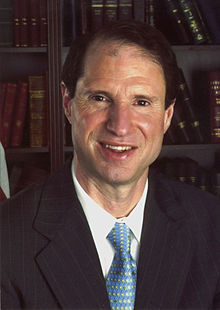
Thankfully, Senator Ron Wyden (D-OR) (above) is leading a filibuster attempt over this bill. Any of us on the right, who mistrust government's motives, need to call and write our Senators and urge them to assist him.

A Better Way To Cut The Deficit


The Congressional Supercommittee has failed to come up with a deficit reduction plan. Personally, I'm thankful for that, since the very existence of the "supercommittee" was a Constitutional violation.

I won't get into a long explanation here of the debated cuts-which-weren't-actually-cuts, or the sequestration of funds, or the odd process by which the supercommittee would have presented a bill. It would be too much like explaining a Rube Goldberg invention.

Instead, I'll discuss the other budget proposal, the one which the supercommittee apparently never considered: Just stop spending!

Let me explain: According to the Congressional Budget Office, a "cut" includes any reduction in planned future spending, even if the total amount spent is greater than current spending. To use Neil Cavuto's analogy, it's similar to a diet where a person plans to gain 100 pounds in ten years, but instead only gains 50 pounds and calls it a "reduction". The "cuts" the supercommittee considered were "cuts" of this type.

The Tea Party proposal, which wasn't even considered by the supercommittee, would have frozen federal spending for ten years. That's it. Project the federal budget for 2021 at $3.8 trillion- the current amount.

By CBO's standard, this would have scored as a $9 trillion cut over ten years- and bring federal spending into virtual balance.

This proposal presents one challenge: Certain areas of federal spending will naturally increase over time- namely, Social Security (as new retirees begin collecting benefits), interest payments on the national debt, and "other federal mandatory spending" (the U.S. government's contractual obligations).

In order to offset these anticipated increases over the long term, actual cuts would be needed in other areas immediately. To give an idea of the shape of these cuts, here is a pie chart of federal spending from 2010 (the current proportions are very similar):


Something you'll notice right away: 80% of the federal budget is made up of just six expenses: Social Security, the Department of Defense, other federal mandatory spending, Medicare, Medicaid/SCHIP, and interest on the national debt. The other 20% is "everything else".

The Tea Party proposal didn't include specific cuts. Simply an agreement to freeze the budget would have been a huge victory. I'll take a little license here and make some "proposals" of my own to keep the budget amount at roughly $3.8 trillion for ten years.

1) Freezing the military budget isn't a bad thing. Admiral Mike Mullen offered a $100 billion reduction is DoD spending in 2010, which he said could be accomplished without making major changes to our military posture, defunding current operations, or defaulting on contractual obligations. I'll take Adm. Mullen at his word, and assume that these cuts could also be implemented in the form of reducing expenditures over time by freezing the military budget (and assuming that some of our current operations will end within the next ten years).

2) Offset growth in "other federal mandatory spending" by cutting in other areas. The "other federal mandatory spending" category is made up of the federal government's contractual obligations- military and civil service pensions, federal unemployment extension funds promised to the states, food stamp and HEAP funds, etc.

It goes without saying that there is substantial work to be done in reducing (and in some cases, eliminating) these expenditures- but this is work that can only be done over the long-term. Among these solutions would be transferring responsibility for food and heating assistance to the states, privatizing long-term unemployment insurance, converting future federal pensions into defined contribution programs, and the like. Naturally, some of the solution to these expenses is fixing our broken economy, which is far too long a subject for this post.

In the short term (i.e. over the next ten years), the amount of these expenses would have to be offset.

3) Paul Ryan is right- privatize Medicare (and block-grant Medicaid). Ryan's plan, which includes an $18,000 annual premium subsidy and, for low-income seniors, a cash account of up to $9,500 to offset out-of-pocket expenses, will reduce the projected cost increases of Medicare- but it will still increase in cost as more baby boomers enter retirement. 

Offset these increases by cutting Medicaid funding by 20% or more, and block-granting the remaining funds to the states. Federal regulations add to the states' cost of supplying Medicaid, so cutting regulations offsets some of the reductions in funds. Let the states decide how to spend the rest of the money- for example, Mitch Daniels' highly-effective (and cost-reducing) "Healthy Indiana Plan".

Also: It strikes me as a total failure of the GOP message machine that the generous amounts proposed by Ryan- $18,000 in insurance premiums and $9,500 in a cash account- weren't being used to sell the idea. Imagine this conversation by pundits on TV:

Democrat Pundit: "Ryan's plan will kill Medicare, which is a great program!"
Republican Pundit: "Seniors would get up to $27,000 every year to buy insurance and pay out-of-pocket costs, and seniors get to choose their own insurance and keep their own doctor."

Argument killed.

4) Offset increases in interest payments by cutting departments. Since the budget won't balance overnight, the national debt would increase in the short-term. This means interest payments on the national debt would increase as well. In the long term, we'll need strategies for paying down the debt- sale of federal lands, for example- but in the short-term, we can offset the expected increase in interest payments by cutting federal agencies. This is where the "everything else" which makes up 20% of the total budget comes into play.

There are lots of opportunities here- eliminate the Departments of Education, Commerce, and uhh... (yes, I know, it's an old joke). Cut earmarks and foreign aid. You, the reader, undoubtedly know these talking points by now, so I won't waste your time repeating them.

5) The big one: Social Security. This is the area which will grow exponentially over the next ten to fifteen years, as the Baby Boom generation enters retirement. It's also a political minefield: Freezing social security payment amounts would mean political suicide for the GOP.

Again, there's a long-term fix for Social Security in the form of privatization. But, as with any long-term solution, there's a short-term problem to address as well.

What's needed here is a "bold plan" (please forgive the Herman Cain-ism), and Walter Williams has one: Offer an exchange of Social Security payments for a federal land grant. The federal government currently holds 29% of the landmass of the continental United States- nearly 650 million acres. Offering this land to those who will enter Social Security in 10-20 years, in exchange for their Social Security payments, could accomplish two things:

a) offset projected Social Security expenses;

b) create a demand for development in the states where this land is held- Wyoming, Montana, Utah, Nevada, etc.- for new home construction, road development, electrical, natural gas, and water supply systems, service-oriented businesses such as grocery stores and restaurants, and the like.

I think this is a terrific idea, and merits much more attention than it currently recieves.

In sum: It's easy to overcome the budget hyperbole from both sides of the aisle and see a solution to our budget problems. All you need is a calculator, a pie chart, and Occam's razor.

Monday, November 21, 2011

It's Settled: Cain Is No Friend Of Gun Owners


I have been arguing for some time that Herman Cain is no friend of gun owners.

At this Saturday's Thanksgiving Family Forum, Cain made some comments on the nature of government authority and individual rights which, I believe, cement my arguments about his stance on gun rights.

Frank Luntz asks Cain to clarify his bizarre Tenth Amendment stance. Watch Cain stumble through his definition of the word "wrong" (these videos are pre-set to play at the correct time):


So, a federal mandate to overturn segregation was acceptable because segregation was "wrong" (and I agree, it absolutely was). But a federal mandate to remove barriers to gun ownership doesn't meet Cain's "wrongness" test?

Now watch Cain explain his definition of equal treatment:


Cain believes that an acceptable use of federal authority is to ensure "the common good" and to "level the playing field" and promote "fairness and respect" (these terms make me cringe, as they are collectivist buzzwords, but that's beside the point). However, equal treatment of individual rights apparently doesn't include equal treatment of a person's right of self-defense, in Cain's opinion.

Now watch Cain describe the justification for using force:


He believes that a person has a right to use force in self-defense, which is terrific, but since (in Cain's opinion) a state may deny the individual the tools to engage in lawful self-defense, the right is rendered meaningless.

There are two possible ways to interpret Cain's conflicting messages:

1) Cain doesn't really understand the legal and political issues involved in gun ownership, and so he falls back on "states' rights" rhetoric; or,

2) Cain is lukewarm (at best) on private gun ownership.

This certainly wouldn't be the first time Cain has tried to use two diametrically-opposed sets of rhetoric (and failed miserably at it). He did so with his comments on abortion- trying to use both the "life begins at conception" and the "woman's choice" talking points.

However, Cain's stance on abortion was already well-known and crystal clear. He made the "woman's choice" remark once, and it was clearly a case of him trying to use incompatible rhetoric.

On gun rights, however, it hasn't been "just once". He's used the "states' rights" rhetoric multiple times, and he continues to stick to it.

Now watch this video: Cain is directly asked about his "states' rights" argument and gun rights:


Question: "Do you support states' rights to regulate firearms?"

Cain: "That's a loaded question."

Excuse me? It's a "loaded question" to ask for a definite yes-or-no?

So, let's review:

Herman Cain doesn't support National Right-To-Carry.

Herman Cain doesn't support "federal mandates" to ensure gun rights, because state gun laws are not "wrong".

Herman Cain supports allowing states to make whatever gun laws they choose.

Herman Cain uses tough rhetoric on gun ownership and self-defense, but resists answering detailed questions on gun ownership (reference the video above, the Wolf Blitzer interview, the New Hampshire question, etc.)

Herman Cain has been using the totally incorrect "states' rights" rhetoric for at least eight months now, and has had numerous opportunities to clarify his position on gun rights- but has not availed himself of any of these opportunities.

Ladies and Gentlemen, given these facts, it's time to put this one to bed: Herman Cain does not support your right to keep and bear arms in any meaningful way. He clearly enjoys his own right to do so (as he said in New Hampshire, "I have six (guns)... and that ain't enough"), and for those who provide his protection. But not yours or mine. In this regard, he's no better than Mitt Romney.