Tuesday, October 25, 2011

Perry's Alternative Maximum Tax


Presidential candidate Rick Perry has finally announced his tax plan. As it turns out, he isn't favoring the Forbes flat tax as initially predicted; rather, his plan is based on Stephen Moore's quasi-flat tax, originally proposed in 1995 as part of Jack Kemp's tax reform initiative.

The plan involves allowing individuals and corporations to select one of two tax plans: to be taxed under the current tax code, or to optionally pay a 20% flat tax, with few deductions (see below), on income exceeding $12,500.

This really isn't a flat tax per se; it's an attempt to replicate Hong Kong's tax code here in the United States. Moore described his plan here in 1998; Alan Reynolds critiqued it in this article in 2005 (both are links from the Cato Institute). Interestingly, Moore makes no comment about his participation in crafting the "optional flat tax" concept in his initial remarks about Perry's plan.

In effect, Moore's plan is a 20% cap on income tax liability, similar to Hong Kong's 16% cap.

At first glance, one might see this as a political expedient- believing a flat tax system won't pass through Congress, but that an optional flat tax system might. I see a potential pitfall with this line of thinking: as in Hong Kong, where only the top 2% of taxpayers pay the 16% flat rate, this proposal would only apply to the top few percent of taxpayers here in the United States. In other words, it would amount to a "tax cut for the rich"- something which makes tremendous sense (especially in the current economic climate) but has always been politically problematic to implement.

Contrast this with the rhetorical core of a flat income tax proposal: Everyone pays the same rate.

The plan does have some positive attributes: An upper limit on income tax liability makes the tax system more predictable for upper-income earners- including owner-operator businesses. It also allows individuals and businesses to choose to simplify tax preparation. Even if this means a slightly higher tax liability for some payers, it may be worth the additional sum to dispense with extensive tax preparation- to pay a bit more for the sake of convenience.

Moore claims an advantage of his proposal which, in my opinion, is specious: He claims that opting into the plan will eventually make the current tax code obsolete, because most taxpayers will eventually decide to pay flat tax. Unfortunately, decades of experience with a dual system in Hong Kong contradicts that claim- as stated above, only 2% of taxpayers opt for the 16% flat tax.

One major fault of the plan is the deductions. As I stated in my Forbes post, the charitable contributions deduction is one of the biggest holes in our tax system. Perry's plan preserves this deduction, as well as the sacred cow mortgage interest deduction and deductions for state and local taxes paid, for persons earning less than $500,000. However, no mention has yet been made of a deduction for business expenses. As stated previously, the business expenses deduction is critical to small businesses and individuals entering self-employment; failure to include it makes the alternative maximum tax a less-attractive option for these taxpayers. Hopefully this deduction will be included as Perry's campaign fleshes out the plan.

All-in-all, Perry's plan is substantially better than 999. It is, essentially, an "opt-out" from the current tax system. With some substantial improvements, it could replicate the effect of Hong Kong's tax system- which is generally accepted to be part of the reason for Hong Kong's economic prosperity, along with greatly less-restrictive business regulations (and cutting business regulations has been a hallmark of Perry's record as Governor of Texas).

I would prefer a flatter tax structure for everyone, for a number of reasons. However, I am cautiously optimistic about this plan.

Saturday, October 22, 2011

The Forbes Flat Tax


Current speculation is that Governor Rick Perry will advocate for the flat income tax plan proposed by Steve Forbes. As a flat income tax proponent myself, I am elated by this news. Perry has referred to the plan as "the most exciting tax plan since Reagan's". I couldn't agree more!

The Basics:

Forbes proposes a flat rate of 17% applied to business and personal income in excess of $36,000 per year, with very few deductions or credits. Corporate income tax, which is a double tax, would be eliminated. Capital gains tax would also be eliminated, which is sensible when one considers that capital gains are realized from investments purchased with already-taxed money. Retirement accounts would continue to recieve the same tax treatment as now.

In Forbes' own words:
The flat tax would be simple. You could fill it out on a postcard. It would be honest. It would eliminate the principal source of political corruption in Washington. It would be fair. Millions of people would be off the federal income tax rolls.

There would be no tax on Social Security. No tax on pensions. No tax on personal savings. It would zero out capital gains taxes. It would set off a boom by letting people keep more of what they earn and by lowering barriers to risk taking.
Flat income tax would also eliminate most of the estimated $140 billion annual cost of tax preparation, remove many opportunities for tax avoidance, and take most of the bite out of the IRS.

There is already broad support for flat tax principles on both sides of the aisle in Congress. Democrats want to eliminate "tax loopholes", Republicans want to lower rates. Flat income tax does both.

Eliminating deductions and credits:

On the one hand, this means no charitable contributions deduction, mortgage interest, child credits, and so forth. On the other hand, I ask the reader this: Look at your tax return for last year. Did all of the tax incentives you claimed- mortgage interest, child credit, charitable contributions, etc.- add up to $36,000? For virtually all middle-income earners, this would equate to a net reduction in federal taxes paid.

Naturally, the major public objection to this concept is the elimination of the charitable contributions deduction. The public at large believe that this deduction promotes altruistic contributions from "the wealthy" to legitimate charities. In fact, the reality of this deduction is somewhat different: Much of the money claimed in this deduction is donated to non-charitable organizations (political and quasi-political organizations, for example).

Indeed, in the book, "The Flat Tax" (which can be bought in e-book format from that link for $6.72, and I highly recommend it, even if it does contain a few left-leaning sentiments), Robert Hall and Alvin Rabushka point out the following:
There is little merit in public subsidy for organizations whose success in raising funds depends on tax deductibility rather than the intrinsic merits of their activities.
Business expenses:

Among the few deductions Forbes would retain is the deduction for business expenses- a very necessary deduction, since taxing business expenses would create a barrier to entering self-employment, and would disproportionally burden small businesses in comparison to large businesses.

The payroll tax problem:

There is one major problem with any flat tax transition: What to do with payroll taxes? Most countries (Russia, for example) which have converted to flat income tax have never addressed their payroll taxes. If payroll taxes are left unchanged here in the US, a flat tax system would pinch the middle class most:

Income below $36,000 per year would be taxed at 7.65% (payroll);

$36-102,000 (Social Security tax cap) would be taxed at 24.65% (17% + payroll);

Income over $102,000 would be taxed at 18.45% (17% + Medicare tax).

Forbes has yet to address this problem. My suggestion? Remove the income cap for Social Security tax, so that it is applied to all income.

I admit this idea has problems, but it also has one whopping big perk. As I explained in a previous post, one of the core components of wealth redistribution is to force employers to fund entitlement programs- through employer payroll taxes- from which the employer will derive no benefit. It conceals the true cost of these programs. It also creates a barrier to hiring new employees, or retaining current employees. The revenue-neutral alternative is to convert payroll taxes into an 8% flat tax on incomes- with no deductions- removing the cap on Social Security tax and eliminating employer contributions into entitlements.

In other words, it would make the "employer payroll tax holiday" permanent.

If this were instituted, tax rates would look like this (notice the miniscule difference from the figures above):

Income under $36,000 per year would be taxed at 8% (FICA);

Income over $36,000 per year would be taxed at 25% (17% plus FICA).

This idea offers another benefit: It would eliminate the tax penalty for self-employment (payment of both "halves" of payroll taxes). A person's tax rate would be the same, regardless if that person were employed or self-employed. Since it would also apply to income derived from capital gains, it would soften the objection to eliminating capital gains tax while also softening the effect taxation has on said investments.

--

In comparison to Cain's "999 Plan", flat income tax is simpler, fairer, more transparent, and decidedly less risky. Flat income tax is also a tried-and-true system, which has been a rousing success in those countries which have instituted it.

In other words, it's exactly what our country needs.

UPDATE (10/25/11): Perry has announced his own tax plan.

Thursday, October 20, 2011

9-9-9 Part II: Coming Apart At The Seams


Now that Cain's campaign has put some more of the 999 Plan in print, we can begin discussing the misconceptions and deceptive language found in this proposal.

The reader should notice immediately, when reading the above link, that most of the "proposal" is meaningless soundbites, non sequiturs, and strategic rather than economic justification for the plan. Once we sift through all of that, however, we run into problems.

The "big secret" about 999? It's really four taxes, not three. It's an income tax, a sales tax, a VAT tax, and a hidden payroll tax, all rolled into one package.

1) It's a payroll tax. Cain has been touting a feature of 999: that it would eliminate payroll taxes. I think it's safe to say that most thinkers agree that eliminating the burden of payroll taxes will help stimulate hiring.

One problem: Cain's plan doesn't do that.

Let me explain: Currently, employers are allowed to deduct payroll as a business expense, so long as payroll taxes are paid on the amount. Under Cain's plan, however, most business expense deductions would be eliminated:
"Gross income less all purchases from other U.S. located businesses, all capital investment, and net exports"
In other words, the 7.65% tax on payroll would be replaced with a 9% tax on payroll and almost every other business expense. This is, of course, in addition to state payroll taxes.

7.65% of payroll is enough of a burden to hiring; 9% of almost everything would be even more so.

Allan Bourdius makes an even graver case: 9-9-9 isn't just a substitute payroll tax, but that it's the mother of all payroll taxes, and would effectively kill service-oriented businesses such as personnel services.

Eliminating the payroll tax paid by the employee, while increasing the payroll tax burden on the employer, is exactly the opposite of needed reform. If government is going to be involved in retirement, low-income health care, unemployment insurance, and the other services funded by payroll taxes, the cost should borne by the employee who might recieve these benefits, not the employer who won't. Burdening job creators with funding social programs is the core of wealth redistribution, and 9-9-9 will only increase that burden.

2) It's a VAT. How do we know? Cain's campaign says it is.

In this PDF from Hermancain.com, the business portion is described as a "subtraction method value added tax". Bizarrely, Cain supporters continue to claim it isn't a VAT.

Most of my readers already know the destructive potential of a VAT; to refresh our memories, here is a classic description of this effect from Murray Rothbard, reproduced by Reason.com.

In fact, it's worse than a VAT. It's a gross receipts tax with VAT-like qualities.

Hank Adler uses Safeway grocery stores as an example of this destructive effect:
One need only look to the annual report of Safeway to understand the impact of 999 on grocery prices. Because the grocery business is incredibly efficient and there is significant competition, there are very, very low margins in the industry. The pretax profit in good years for Safeway is only about 2% of sales and the Federal income taxes therefore are less than 1/2% of sales. After making a reasonable guess based on other information in the Safeway annual report, the total Federal income tax plus Safeway’s portion of their employees’ payroll taxes is less than 2% of sales. Assuming that would all be passed through to the customer in the way of price reductions, the price of food must increase by about 7%.
In addition to this estimated 7% increase in food prices, there's a new sales tax, which brings us to this:

3) It's a national sales tax. And it's not just any sales tax, either. As Adler questions (above), Cain's campaign isn't clear about whether this will be an exclusive sales tax (as state sales taxes in the US currently are), or an inclusive tax. I argue that this ambiguity points toward Cain's intentions: The tax will be inclusive.

We can readily deduce this: Cain is an ardent FairTax advocate. Cain has stated his desire to implement full FairTax. He has described 9-9-9 as an introduction to full FairTax. FairTax is an inclusive tax. Hence, his "introductory" FairTax will also be inclusive. And if the sales tax portion of 9-9-9 were intended to be exclusive, like current state sales taxes, wouldn't Cain would just say so and alleviate any concern?

If the reader is still in doubt about this point, there are two more pieces of evidence:

a) The scoring tables for 9-9-9 (PDF) from Cain's own website include tables for a "poverty grant" to offset the regressiveness of 9-9-9 (see Point 6, below). In other words, it would include a "prebate", just like FairTax. Interestingly, Cain is simultaneously claiming no "poverty grant" would be included, citing the reasons I cited in a previous post about "prebate" becoming yet another welfare entitlement.

b) Cain has renewed his intent to use 9-9-9 as a step toward full FairTax. From the 9-9-9 link at the beginning of this article:
Amidst a backdrop of the economic renewal created by the 9-9-9 Plan, I will begin the process of educating the American people on the benefits of continuing the next step to the Fair Tax.
I think it's safe to assume that Cain's "FairTax Lite" will be an inclusive tax- one which is hidden in the shelf price of goods and services.

4) It's a flat income tax. This is terrific- I'm a flat income tax advocate. However, as I have warned before, authorizing the federal government to collect both income and sales taxes simultaneously is dangerous. Does any reasonable person honestly believe that Congress, once authorized to tax both incomes and sales (and clandestinely embed the sales tax in the cost of goods and services), will keep the rate at a mere 9%?

There are two other points which need to be made about 9-9-9:

5) It's unconstitutional. The Constitution does not authorize the collection of a sales tax. Period.

Additionally, part of Cain's plan is the creation of "empowerment zones"- areas of the country where tax rates are lower, or special incentives would be offered. This clearly violates Article I, Section 8 of the Constitution: "...all Duties, Imposts and Excises shall be uniform throughout the United States".

We have enough Constitutional violations embedded in Federal law today, without adding more.

6) It's regressive as hell. While it would cut taxes for the wealthiest taxpayers- which is fantastic, because they pay too much in taxes as it is- it shifts the tax burden toward the poorest. Indeed, an estimated 84% of Americans would experience a tax increase. While it's true that 47% of Americans pay no income taxes (other than payroll tax), what about the other 37%- the middle class who pay income tax now and will pay more under 9-9-9? One goal of tax reform- and of government spending reform- must be to reduce the tax burden on all taxpayers, without incurring more national debt.

So, there you have it. 9-9-9(-9): an unconstitutional, regressive plan which will embed taxes and endanger our economy. It's ill-conceived, unnecessarily convoluted, and potentially dangerous to our economy.

Which is why I'm voting for Rick Perry, who supports a flat tax. (UPDATED 10/25/11)

Wednesday, October 12, 2011

Romney On Guns: Like Father, Like Son


Mitt Romney says he "supports the Second Amendment". And, based on a casual glance at his record, you could almost believe him. As governor of Massachusetts, he signed some laws to protect hunters and clarified some language in the state's gun laws.

On the other hand, he signed an "assault weapons" ban. As Mitt has said, he was a Republican governor in "a tough state", and he had to make some compromises on these issues.

Naturally, there is some back-and-forth about Romney's gun views- were his actions a "net positive" for gun owners in Massachusetts, as he claims, or were his efforts cleverly-disguised gun grabs?

Let me ask you, the reader, a question: Who was the most influential in forming your political views? I'm willing to bet most of you answered "my parents".

Mitt Romney's father, George, was governor of Michigan from 1963-1969; Mitt has often said that his father was his greatest inspiration. And if we compare the gun laws each Romney passed while governor of their respective states, we find some telling parallels.

Handgun Ownership: In order to understand Mitt Romney's actions here, it is necessary to give a little background information about Massachusetts gun control laws: In 1998, Massachusetts established a list of "safety" criteria for handguns sold in the state. The criteria were designed to disqualify most handguns. The Roster is the list of those few makes and models which have passed the testing requirements.

Mitt Romney created two exemptions: One for handguns already licensed in the state prior to October 21, 1998, and one for "match-grade" pistols (high-dollar handguns purpose-built for shooting competitions).

The 1998 exemption is significant when one understand the "preban effect": Some gun laws are written with an effective date, where firearms sold after the date are subject to the law, while those sold before the date are "grandfathered". Since there is a limited supply of grandfathered items, the sale price of those items skyrockets.

The net effect of Mitt Romney's exemptions was this: In Massachusetts, a person now has three options for legally owning a handgun: 1) an expensive pre-1998 handgun; 2) an expensive "safety-approved" handgun; 3) an expensive match-grade handgun.

Compare this to George Romney's "safety" law- Public Acts 215 and 216 of 1964- which required all handguns to be submitted, within ten days of purchase, for inspection by a law enforcement officer in order to obtain a "safety certificate". "Safety", however, was undefined, and determining that a handgun was "safe" was left entirely to the discretion of the officer conducting the inspection. In effect, law enforcement could determine any handgun to be "unsafe", and confiscate the handgun on the spot, without compensating the buyer for his loss. This provided a disincentive for unpopular persons and minorities to attempt to lawfully buy handguns, knowing their handguns would be confiscated. Likewise, a lower-income person would not want to take the risk of saving money to buy a handgun, only to have their investment confiscated in this manner.

Like father, like son: Both Romneys used the guise of "safety" to deny the right to own a handgun to lower-income persons and "undesireables".

Carrying Handguns: Before George Romney became governor, Michigan had created a very restrictive licensing law for carrying a concealed handgun: License applicants had to prove an immediate physical risk to a county license board consisting of representatives of the county prosecuting attorney, county sheriff, and the commissioner of state police. Needless to say, many applications for a carry license were rejected (and this state of affairs led to concealed carry reforms decades later). A concealed carry license was also required if a person wanted to transport a loaded handgun in an automobile, whether or not the handgun was concealed. Open (visible) carry of a handgun was technically legal (outside of an automobile), but in practice, doing it would usually lead to arrest for a "disturbing the peace" type of charge.

So, what was one to do if they wanted to carry a handgun, but weren't politically connected enough to get a concealed carry license? Answer: Get a private security guard license. Said license authorized a person to carry a handgun openly without fear of arrest, carry a loaded handgun in an automobile, and was issued to virtually anyone who applied.

George Romney, however, made that practice illegal. Public Act 100 of 1966 made it a misdemeanor for a licensed security guard to carry a handgun except during work; Public Act 49 of 1967 made it a felony.

Romney did, however, extend concealed carry privileges in Michigan to licensees from other states- understanding that, in the 1960s, almost all states had similarly-restrictive processes for issuing a license to carry concealed. Romney did little more than extend a privilege given to an "elite few" in his state, to the similar "elite few" of other states.

By comparison, Mitt Romney had little work to do in this regard: By the time he took office, Massachusetts already had a two-tiered carry law: Persons with a "Class B" license could "carry" (transport in a box) an unloaded firearm to and from hunting areas and target ranges; the "elite few" granted a "Class A" license (issued to those who could prove a "need" to local law enforcement, as in Michigan in the 1960s) were entitled to carry a concealed handgun for self-defense.

While running for Governor in 2002, Mitt Romney infamously said: “I won’t chip away at them; I believe they protect us and provide for our safety.” And he didn't.

Like father, like son: Both Romneys supported restricting the carrying of handguns for self-defense to an "elite few" of police and politically-connected businessmen.

Assault Weapons: The firearms we nowadays call "assault weapons"- certain types of semi-automatic rifles which cosmetically resemble military rifles- were extremely uncommon in the early 1960s (indeed, most modern "assault rifles" had not yet been invented). On this point we can't compare the record of the two Romneys, as this is a modern gun rights issue. Mitt Romney signed Massachusetts' assault weapons ban- and has frequently cited that he did so because such weapons as "especially lethal" and "not sporting" (see below). As I have stated before, this type of weapon is uniquely suited to the growing problem of home-invasion crimes; denying them to the public places a limit on the practical application of an individual's right of self-defense.

Sporting Purposes: George Romney signed only one hunting regulation as governor- Public Act 159 of 1967, which created a regulatory board for hunting and mandated certain hunting safety practices. Mitt Romney, as governor, signed laws to protect shooting clubs, institute youth hunter safety courses, and restored funding to the Massachusetts Inland Fish and Game Fund. Both Romneys used their "pro-sporting" message as part of their election campaigns.

Like father, like son: Both Romneys used "sporting" rhetoric to conceal their gun control agendas.

In sum, it's not fair to say Mitt Romney is "anti-gun". Likewise, it's not reasonable to believe Mitt was merely bending to the political will of the people of Massachusetts (I doubt the will of the people was to rehash 40-year-old gun control ideas from another state). As proved here, the more natural conclusion is that Mitt was emulating his father's beliefs and ideals.

It is fair to say that Mitt is an elitist on the subject of firearms. His record demonstrates a WASP-y, 1950's view of gun ownership: "Decent" people own guns for hunting and sporting, and protecting their homes. "Decent" people don't "need" to carry guns for self-defense. Preventing people who aren't "decent" from owning guns is a good idea.

His dad felt the same way.

Monday, October 3, 2011

Herman Cain: Six Of One, Half-Dozen Of The Other


Herman Cain's presidential campaign has gained considerable momentum since his recent straw poll victory in Florida. This comes as a shock to me, since I have scratched my head to find a reason why Cain generates so much support amongst "conservatives", since his stances on any meaningful issues are anything but "conservative".

To finally put to bed the notion that Cain is a "good conservative", here are his positions on meaningful issues:

Economic Foresight: In 2005, Cain argued our economy was booming. He didn't percieve any signs of looming economic problems (such as a housing bubble). In 2008, Cain again argued that our economy was booming. He didn't percieve any signs of the housing bubble. In his opinion, warnings about impending economic problems were "Democratic deception" (naturally, Republicans and independents warning of the same were "drinking the Kool-Aid"). Cain's main selling point is his business acumen- and this opinion severely undercuts any confidence in that.

Tom Woods has compiled an excellent case of his own against Cain, focusing on his economic positions, some of which I have borrowed here.

Taxes: Herman Cain is an ardent FairTax supporter. Recently, he has introduced his "999 Plan"- which holds the Laffer curve as a "deus ex machina" to solve our economic problems, rather than a realistic rule-of-thumb, and (if passed) would establish a dangerous precedent for the federal government: the authority to tax both income and sales.

Gun Control: Herman Cain's stated stance on gun control is bizarre- he seems to believe the federal government has only limited authority to regulate firearms, while the states may do so without restriction. Prior to Cain, I had only heard this position espoused by anti-gun judges (like Sonia Sotomayor)- people who favor very strict gun control but must appear to respect the Constitution. If we assume for a moment that this wasn't a "gotcha" question posed by Wolf Blitzer, and that this accurately reflects Cain's Second Amendment stance, then this is a problem.

This position also ignores an historical fact, cited by Justice Clarence Thomas in the US Supreme Court's McDonald decision (incorprating the Second Amendment on the states): The basic reasoning behind the Fourteenth Amendment was to incorporate the Second on the states. At the time of its passage, southern states were passing gun control laws intended to disarm newly-freed blacks. The fact that Cain- a southern black man who lived through segregation- misses this point, is deeply troubling to me.

Romney: Cain supported Mitt Romney in 2008. Romney, like Cain, has a record of poor economic foresight and bad tax policies, and Romney passed numerous gun control laws in Massachusetts while calling himself "pro-Second Amendment".

Monetary Policy: Cain is a former Chairman and member of the Board of Directors of the Kansas City Federal Reserve Bank. It should be no surprise, then, that he opposes auditing the Fed (or at least, wants to convince the public that an audit would be pointless). Whether you are an "End The Fed!" libertarian, or a money-wise conservative, it should be obvious that a Federal Reserve audit is long overdue.

Foreign Policy: Cain is totally clueless on foreign policy. I need say very little that wasn't already said by Bill O'Reilly in this video (thanks to Mediaite). I will also add this video of the infamous "Right of Return" flub.

Race Baiting: Cain has participated in a vicious, and totally meritless, smear against Rick Perry, described in great detail here (thanks to RedState). This is nothing less than a despicable attempt to play the "race card" to gain an advantage.

To summarize: Herman Cain's gun control stance mirrors the most anti-gun leftist judges; his tax stance is deceptive, and would lead to Americans paying more of their income to the federal government; he supported a candidate in the last election with similarly left-leaning positions (and who is now running from those positions); he has a history of bad judgement on our economy; he believes the Federal Reserve should continue to be unaccountable to Congress; he is clueless on foreign policy; and he plays the race card to attack his white counterparts.

Cain is a social-issues populist. The support he currently garners is based on one quality: He makes some people "feel good" about their convictions. He inspires "hope" in people, and his supporters believe he will bring "necessary change".

In other words, he's the Republican party's version of Barack Obama.

Friday, September 23, 2011

Herman Cain's "999 Plan": Worse Than Godfather's Pizza


Some weeks ago, Presidential hopeful (and former Godfathers' Pizza CEO) Herman Cain announced his "9-9-9 Plan" (PDF). No, it isn't a pizza special. It's a 9% flat personal income tax, a 9% flat corporate income tax, and a 9% national sales tax ("FairTax"), replacing the current federal tax system. Cain has been touting this plan at each Presidential debate since the announcement, and it has found some support among tax reformers.

I believe Cain's "999 Plan" is nothing less than an attempt to achieve an aspect of FairTax I have been warning about: Authorizing the federal government to tax both incomes and sales.

Let's understand something first: Herman Cain is an ardent FairTax advocate. He has said, on many occasions, that he favors implementing the full FairTax act. He has argued passionately in favor of FairTax.

However, in his 999 brief (PDF above), he also states he is in favor of a 25% income tax and the elimination of capital gains tax. Quote:
• As I have outlined, the following represent the minimum for feeding the economic engine and are the "low hanging fruit" offering the most "bang for the buck"
• Reduce individual and business income taxes to a maximum 25%
• Eliminate taxes on repatriated foreign profits and capital gains
• The capital gains tax is a wall separating those with ideas from those with money
So far, his committment to both an income tax and a sales tax could be debated. Until you add this:
• Current circumstances call for bolder action
• The Phase 1 Enhanced Plan incorporates the features of Phase One and gets us a step closer to Phase two
• I call on the Super Committee to pass the Phase 1 Enhanced Plan along with their spending cut package
• The Phase 1 Enhanced Plan unites Flat Tax supporters with Fair tax supporters


• Achieves the broadest possible tax base along with the lowest possible rate of 9%
• It ends the Payroll Tax completely – a permanent holiday!
• Ends the Death Tax
• Business Flat Tax – 9%
• Gross income less all investments, all purchases from other businesses and all dividends paid to shareholders
• Empowerment Zones will offer additional deductions for payroll employed in the zone
• Individual Flat Tax – 9%
• Gross income less charitable deductions
• Empowerment Zones will offer additional deductions for those living and/or working in the zone
• National Sales Tax – 9%
• This gets the Fair Tax off the sidelines and into the game.
FairTax has been recieving sharp criticism from many Flat Income Tax advocates (I personally am but one voice in a choir). Herman Cain is betting- and may be correct- that much of the opposition to FairTax is the notion of a sales tax rate of 30% (pardon, 23% "inclusive"), rather than opposition to the many conceptual problems (some of which I have covered here and here). So, Cain has decided to resort to the sort of trickery used to pass the income tax amendment a century ago- promising an inoffensively low rate as part of a familiar "hybrid" system ("familiar", since most US states already have both a state income tax and a state sales tax), using the flat income tax portion of his plan to bring his sharpest critics- flat tax advocates- into his camp.

Stated differently, Cain is proposing to implement FairTax at a "teaser rate"- without repealing the 16th amendment- and acclimating the American public to paying both forms of federal tax. As happened with the federal income tax, the rate will climb: A century ago, the federal government claimed income tax would never exceed 7%.

Adding to this dubiousness is Cain's own explanation of how he arrived at his 9% formula:


By his own words, "all the revenue coming into the federal government" can be replicated with a 9% personal income tax, a 9% corporate income tax, and a 9% national sales tax, and elimination of payroll taxes (like FICA).

For clarity, here is the pie chart of federal revenues for fiscal year 2010, from Wikipedia:


You should notice right away, 40% of the federal government's total revenues come from the 15.3% payroll tax (the green wedge), which Cain proposes to eliminate (and replace with a 9% sales tax). You should also notice that individual income taxes are the largest wedge- which Cain believes can be replicated with a 9% flat tax. Though I'm a firm believer in the Laffer curve principle, I have no doubt that Cain's 999 Plan can't possibly replicate these revenues.

I do agree with Cain on one important point: Notice the red wedge. This is corporate income tax. Our corporate rate is the second-highest in the world (35%), yet it only accounts for 9% of total federal revenues. This tax cripples our economy- and this chart should remove all doubt that drastically cutting (or eliminating) it would be an absolutely positive step (again, the Laffer curve at work).

So, to review: Cain is proposing to institute a FairTax "teaser"- to introduce federal sales tax along with income tax. He must know that his "teaser" rate cannot possibly sustain current revenues, and will have to be raised. We know from American history that an introductory tax rate will be raised. And Cain has just shown us that he is willing to decieve his audience with impossible math.

And this plan, if instituted, sets the stage for Americans to eventually pay both massive income taxes (as we do already), and a massive federal sales tax.

Does this sound "Fair" to you?

Wednesday, September 21, 2011

Guess This Constitution


Below is the Bill of Rights from another nation's constitution. I am omitting the "spoilers", the parts which would identify the country in question. Can you name the country in question? No skipping ahead, please!


Chapter V. Basic Rights and Responsibilities of Citizens

Article 62. The requirements for becoming a citizen of [this country] shall be prescribed by law pertaining to nationality. Citizens shall be under the protection of [this country], regardless of their place of residence.

Article 64. The state shall substantially guarantee all citizens genuine democratic rights and freedom, and happy material and cultural lives. In [this country], the rights and freedom of citizens shall be further expanded with the consolidation and development [this country's] governmental system.

Article 65. Citizens shall have equal rights in all spheres of government and social life.

Article 66. All citizens who have reached the age of 17 shall have the right to vote and the right to be elected, irrespective of sex, race, occupation, length of residence, property and intellectual level, party affiliation, political view, or religious belief. Citizens serving in the armed forces shall also have the right to vote and the right to be elected. Persons who have been disenfranchised by a court decision and persons who are insane shall not have the right to vote or the right to be elected.

Article 67. Citizens shall have freedom of speech, press, assembly, demonstration, and association. The state shall guarantee conditions for the free activities of democratic political parties and social organizations.

Article 68. Citizens shall have freedom of religion. This right shall be guaranteed by permitting the construction of religious buildings and the holding of religious ceremonies. Religion shall not be used in bringing in outside forces or in harming the state and social order.

Article 69. Citizens may make appeals and file petitions. The state shall fairly deliberate and deal with appeals and petitions as prescribed by law.

Article 70. Citizens shall have the right to labor. All citizens who are able to work shall choose occupations according to their wishes and talents, and shall be guaranteed secure jobs and working conditions. Citizens shall work according to their abilities and shall be paid in accordance with the quantity and quality of their work.

Article 71. Citizens shall have the right to rest. This right shall be guaranteed by the establishment of working hours, legal holidays, paid leave, rest and recuperation at state expense, and by a variety of continuously increasing cultural facilities.

Article 72. Citizens shall have the right to receive free medical care, and persons who are no longer able to work due to old age, illness, or physical disability, and the old and children who do not have caretakers, shall have the right to receive material assistance. This right shall be guaranteed by free medical care, continuously expanding medical facilities that include hospitals and sanitariums, and the state social insurance and the social security system.

Article 73. Citizens shall have the right to receive education. This right shall be guaranteed by an advanced educational system and the state's people-oriented educational measures.

Article 74. Citizens shall have freedom to engage in scientific, literary, and artistic activities. The state shall grant benefits to inventors and creators. Copyrights, patents to inventions, and other patent rights shall be protected by law.

Article 75. Citizens shall have freedom of residence and travel.

Article 76. (Servicepersons), and families of servicepersons of [this country]'s Army, and disabled soldiers shall receive special protection from the state and society.

Article 77. Women shall be entitled to the same social status and rights as men. The state shall provide special protection to mothers and children by guaranteeing maternity leave before and after childbirth, reducing working hours for mothers with many children, and expanding the network of maternity hospitals, nurseries, and kindergartens, and by implementing other measures. The state shall provide every possible condition for women to participate in society.

Article 78. Marriage and family shall be protected by the state. The state shall take deep interest in consolidating the family, the basic unit of social life.

Article 79. Citizens shall be guaranteed inviolability of the person and the home and privacy of correspondence. Citizens cannot be detained or arrested and their homes cannot be searched without legal grounds.

Article 80. [This country] shall protect people of other countries who defected while struggling for peace and democracy, for national independence, and for freedom of scientific and cultural activities.

Article 81. Citizens shall firmly safeguard the unity and cohesion of the people. Citizens shall value their organization and collective and highly demonstrate the trait of dedicating themselves to work for the society and the people.

Article 82. Citizens shall abide by the laws of the state and the socialist standards of life and defend their honor and dignity as citizens of [this country].

Article 83. Labor is a sacred duty and honor of citizens. Citizens shall voluntarily and sincerely participate in labor and strictly observe labor discipline and working hours.

Article 84. Citizens shall value and love the property of the state and social cooperative organizations, struggle against all forms of misappropriation and waste, and assiduously manage the country's economy in a manner befitting a master. The property of the state and social cooperative organizations shall be inviolable.

Article 85. Citizens shall always [dedicate] themselves to the security of the state.

Article 86. Defending [this country] is the supreme duty and honor of citizens. Citizens shall defend [this country] and serve in the armed forces as prescribed by law.

Soooo... which country produced this constitution?

Here's the "big reveal": It's the Constitution of North Korea.

What do we see in this "bill of rights"?

We see standard items- the "right to vote", the "right to privacy" (in correspondence), freedom from search and seizure in some form, and so on. Naturally, none of them are obeyed. Contrast the "freedom of religion" with North Korea's record of persecuting Christians.

Obviously, there is no "right to keep and bear arms"- a vital component of American freedom.

More insidious, though, and a point I make frequently: Every "right" listed is positively-defined, i.e. "the people shall have a right to (X)". Our Constitution negatively defines rights- "Congress shall make no law", "... shall not be infringed...", etc. Negatively-defined rights are limits on the power of government to interfere with the natural, God-given rights of the people. Positively-defined "rights" are not rights at all; they are merely privileges, granted by government to the people (and, as painfully demonstrated in North Korea, privileges which can be revoked by the government on a whim).

The really terrifying thing, though, is how eerily similar some of these provisions are, to provisions in US Constitutions. Notice the "right to education". You may be surprised to know this, but many US states have a similar provision in their state Constitutions (New York and North Carolina, for instance). Again, a government "grant" to the people, enshrined as a "right".

Notice the frequency of "collective" rights. Although the term "the people" is used in our Constitution, it is used to indicate "all persons", individually. Many of North Korea's "rights" are collective in nature- applying to "the people" as a group. Rights must be individual in nature- because they belong to each of us, individually, as unique beings. Contrast this with one of the "spoilers" I omitted:
Article 63. In the DPRK, the rights and responsibilities of citizens are based on the collectivist principle of "One for all, all for one."

Notice also, the great number of "rights" conferred- including some absurd provisions, such as a "right to rest". Minor, trivial "rights" which are constitutionally enshrined, serve only to dilute the value of essential liberties. Consider New York's "Bottle and Can Return Bill of Rights" (PDF).

Finally, notice the "responsibilities" of the people which are listed. In a free country, a Constitution is not a "contract" between the government and the people; it is a list of orders from the masters of government (the people), to be obeyed by the servant (the government).

Liberty must be jealously preserved, and Constitutional principles strenuously guarded. As we have seen here, rights not exercised are rights lost.

Monday, August 22, 2011

"The Right Arm Of The Free World"


I admit to being sentimental about firearms. After all, the history of guns is essentially the history of the modern day. The rifle carried by the Libyan fighter above, is one of the most iconic of the 20th century: the FAL.

After World War Two, major armies- having learned hard lessons about the realities of modern combat and the inadequacies of (largely) turn-of-the-century infantry weapons- set out to design new "battle rifles" to meet these new requirements. The Belgian firm Fabrique Nationale, spurred by the recent creation of NATO and the opportunity to capture the market on infantry rifles- devised the Fusil Automatique Leger- "Light Automatic Rifle"- with the encouragement of the British, who sought to have a common rifle used by all NATO member nations. The FAL never became universal: The United States insisted on adopting its own, equally-capable rifle, the M14; some nations opted to purchase the alternative Heckler and Koch G3; and some nations allied themselves with the Soviet Union and recieved generous shipments of the ubiquitous AK-47 series.

The FAL, however, did see worldwide acceptance. It became the official service rifle of Britain and most of the Commonwealth nations, the majority of NATO countries, and Israel. In fact, nearly 90 countries have issued it at one time or another. It was the symbolic counterpoint to the USSR's widely-distributed AK-47. The FAL's widespread adoption by Western nations earned it the nickname it still carries today: "The Right Arm of the Free World".

The FAL saw service in nearly every conflict of the Cold War era, virtually always on the side of the "good guys". In some cases, such as the Falklands War, the FAL's ubiquity meant it was carried by troops on both sides of the conflict. Perhaps most noteworthy, it was the standard rifle carried by Israeli troops in the Six Day War.

One of the recent developments in the Libyan conflict has brought the FAL to the forefront yet again: Libyan rebels captured a government arsenal, and among the weapons seized were thousands of Cold War-era FALs like the one in the photo. Although I share the concerns some Americans have about the participants in this rebellion, I can't help but feel a small thrill of nostalgia. "The Right Arm of the Free World" has, once again, been called to serve in the cause of liberty.

Sunday, August 7, 2011

Yet More FairTax Rebuttal


I recieved this comment from Chad in response to "More FairTax Rebuttal". Since Blogger won't let me respond to comments, I decided to turn it into its own post. I will respond to each point of Chad's comment individually.
Flat VS Fair
1. Flat doesn't tax illegals, drug dealers and others who currently do not pay income taxes. Fair Tax does.
It would also tax social security recipients, retired military personnel, and other persons whose incomes are currently privileged from income tax. Additionally, the cost of providing a social safety net would "necessarily skyrocket", since the tax would have to be paid on purchases made with welfare dollars (food, baby furniture, etc.). The proposed "prebate" would not be sufficient to cover the tax on these expenses.

It's more than a little irresponsible to propose tax policies because of their punitive value- i.e. "taxing pimps and drug dealers"- because some other group of people will also be unfairly penalized- i.e. social security recipients, and every taxpayer whose money goes to provide social welfare programs.

2. Flat is still a tax on income, allowing the government to control how much they tax you. With FT, you could conceivably live "off the grid" and not pay federal income taxes, therefore you control how much you are taxed, not the government.
Two points:

1) A question: Why do FairTax proponents assume that the FairTax taxation rates will never be changed? As I explained in a previous post, we must assume that FairTax rates would change, and would change in ways intended to manipulate consumer behavior.

2) "Off the grid", as in, the way pimps, drug dealers, and illegal immigrants currently live? How would FairTax tax this group of "off the grid" people, without taxing all "off the grid" people?

3. Flat would reduce the IRS size, but not as much as the Fair Tax. April 15 would still mean preparing taxes, which is $400 million that could be going elsewhere.
I'm glad Chad brought this up. FairTaxers won't discuss this detail, but I will: The supposed "elimination of the IRS" is true only to a certain extent: It would pass the responsibilities of the IRS onto state and local tax departments, who would become federal tax collectors by default. Additionally, state and local governments would be required to pay the 23% tax on all official purchases. This means each taxpayer's state and local taxes would "necessarily skyrocket".

4. Flat still taxes businesses. When you raise taxes on corporations, they just raise the price of the product, and we all end up paying for it. Corps don't pay taxes, people do.
Another great point! Every serious Flat Tax proponent (including myself) is in favor of eliminating the corporate income tax. Stated differently, we're in favor of applying the above-mentioned (and totally correct) economic principle with greater vigor than FairTax proponents, who still want businesses to pay a 23% (or more) tax on business purchases.

5. Flat tax would still include deductions for certain items, which means lobbyists will still be around, and tax loop holes are bound to open. It also means we will be back to where 49% don't pay any taxes.
FairTax would contain deductions for certain items, too (read the link provided in point #2 above). The difference is, FairTax deductions would have a magnified effect on purchasing habits, since the tax is paid "at the register". Adding or exempting the 23% (or more) tax on a given item will encourage or discourage the immediate decision to purchase it. This means the FairTax can be used to manipulate everyday purchases- sugary soft drinks, types of lightbulbs, you name it. Income tax deductions, on the other hand, don't have the capability to manipulate purchasing on this small, every day scale.

Flat tax has many of the same issues that you point out with Fair Tax (like the government being able to change the amount they tax at any time), and more. Fair tax Pros greatly outweigh its cons, and definitely is a better solution than the flat tax.
There are many, many problems with FairTax- FairTaxers simply refuse to acknowledge them. Some of them are academic, but others- like the added burden of higher state and local taxes- would cripple middle America. Any proposal which contains the prospect of crippling the middle class is certainly not "a better solution".

Sunday, July 31, 2011

Boehner Has Snatched Defeat From The Jaws Of Victory


It's high time I air my thoughts about the debt ceiling debate. For the record, I am opposed to raising the debt ceiling. However, it clearly will be raised, and John Boehner- who was presented with an excellent opportunity to own the debate- has fumbled yet again (shades of the Continuing Resolution debate a few months ago).

The House of Representatives has sent two bills to the Senate on this issue. Both bills a) raise the debt ceiling, and b) exempt entitlement programs and military spending from sensible spending reductions. In other words, these bills compromise heavily with the Senate democrats. Nonetheless, the President and the Senate Majority Leader are insisting that Republicans won't compromise. The Democrats want a larger debt ceiling increase- large enough to ensure continued government spending and eliminate this debate until after the 2012 campaign. If done, this would eliminate the Tea Party's strongest position (and the President's weakest).

Boehner's actions- continued compromise with Reid, paltry attempts to appease the Tea Party caucus, lackluster speeches, etc.- are attempts to please all sides. Like Obama and Reid, he has failed to demonstrate leadership.

I have been saying for a week now, and will say again here: Boehner had a fantastic opportunity to own this debate, and blew it.

Here's what he should have done: Send the House home.

Tell the House GOP members to get on TV, and tell the truth: The House has sent two bills to the Senate. Both bills bend over backward to accomodate Democrats. Both bills raise the debt ceiling, and exempt military spending and entitlements. Keep the speeches short and spin-proof.

Then he should have put the ball in the Senate's court, by giving them three options: a) Pass Compromise Bill A; b) Pass Compromise Bill B; or c) continue to complain and let the cards fall. He should have told the American people that we have compromised as much as humanly possible, and it's time for the Democrats to do the same.

If Boehner had done this, he would have cemented his position as Speaker in the next Congress; brought leadership to this debate; obviated the Democrats' "compromise" meme; paved the way for a real budget debate; and put us a step closer to cementing Obama's defeat in 2012.

Instead, Boehner did what he does best: He snatched defeat from the jaws of victory.

Wednesday, July 13, 2011

More FairTax Rebuttal


I recently recieved this response from Robert Williams at FairTaxer to my Six Reasons The FairTax Is A Really Bad Idea post, following my response to Sen. Dick Lugar (R-IN) on Twitter on the subject. He was thoughtful enough to write a very long and detailed response, so I would like to do the same here.

Please read his post above before continuing.

1: We can't disagree that "sales taxes are often the most regressive form of taxation", because they are. The lower your income, the greater the share of your income subject to sales taxation, which is a regressive tax. Yes, FICA are other payroll taxes are regressive, but then, I never expressed any approval of them. I think that's a common problem with FairTaxers: You seem to believe that if FairTax isn't instituted, the tax code will never be changed.

I'll address the prebate separately, because it's a separate issue.

2: It's not just a viable argument, it's an historical fact. It's happened in every state which has a sales tax.

3. That presumes Congress won't make changes to the tax system, which they make every year.

4. It's an excise tax on every type of product purchased. Excise taxes are meant to apply to a particular type of good- the federal excise tax on firearms, for example (and that tax has other constitutional problems). That's clearly outside the intent of the Constitution.

5. a) Every state's sales tax code contains deductions and exemptions. Foods, for example, are taxed at a lower rate, or certain foodstuffs are exempted from taxation. b) It's sure as heck would apply to business expenses. If a business buys, for example, a vehicle for deliveries, they'd have to pay the tax, because they are the "end user". What you're describing is the purchase of components (like a pizzeria buying pizza sauce). Let's also add another undisclosed facet: State and local governments would also have to pay the tax- and become tax farms of the federal government. That's CLEARLY outside the intent of the Constitution.

6. Again, you assume that no changes would ever be made to the FairTax concept. Changes are inevitable. The "prebate" may initially be given to everyone- until a Democrat majority decides that it's a "tax break for the rich" (or some other nonsense talking point), and puts an income cap on it, or a GOP majority needs to cut spending in that area, and puts an income cap on it (like the current movement to "means test" Social Security). When the prebate becomes a grant to persons with lower incomes (because of an inevitable income cap), it becomes an entitlement program, just like EITC is.

The above also addresses your first three "other points"- i.e., the assumption that Congress would make no changes to the FairTax proposal. We know, with a high degree of historical and political certainty, that changes would be made, including changes in definitions of how prebate is calculated.

Also, EITC is paid once a year, to a small percentage of households. FairTax proposes to calculate and pay 12 times per year, to every household. That's a big difference in bureaucracy, especially in enforcement costs.

Now, for your "good points:

A. "The tax is paid at the register"- yes, and collected by the states and their political subdivisions, making them tax fiefs of the federal government (in addition to having to pay the tax themselves). This also adds costs to the states' tax departments- how would those costs be reimbursed (if at all)?

C. What you failed to mention, is that it would be extremely regressive on the middle class. Yes, it would exempt those below the poverty line, and benefit those at the top (which is a good thing, they pay too much as it is). However, this system would "pinch" those who earn between $30,000 and $200,000 with a greater total tax burden than they currently pay. That's not "We The People", it's reducing the middle class to lower-class status. Far from eliminating class warfare, it would increase class warfare- because class warfare is inevitably produced when there is no distinct middle class (i.e. it's "the rich" vs. "the poor"). It amazes me that the only FairTax response to the problem is "denial and restatement"- i.e. "No, it won't hurt the middle class. To restate, everyone would recieve a prebate...".

Unfortunately, FairTax is not as "flawless" as advertised by it's proponents. It's full of logical holes, and irrational presumptions (such as the presumption that its provisions would never be changed).
I welcome further response (in fact, I've recieved more response to my single FairTax post than all other posts I've made combined!).

Monday, June 20, 2011

MOLON LABE!


Does the Second Amendment provide a practical check on the abuse of government power?

Steven L. Taylor wrote this article over at Outside The Beltway (please go read it before continuing here), to 'disprove the myth' of a Second Amendment remedy to tyranny. Although it was that article which has prompted me to write this, and much of this will be phrased as a response to same, please don't take this as an "attack" on Dr. Taylor.

First and foremost, I reject the nature of Dr. Taylor's premise- that the government would be "transformed into a functional authoritarian state bent on tyrannizing us". Anyone involved in libertarian politics knows that such transformation happens gradually, not immediately; and for each step of this transformation the Second Amendment offers a remedy. These remedies, taken together, form 'layers of security' against government action.

Tyranny often begins with a percieved threat to public safety, requiring the public to surrender a little bit of their individual liberty, and some tax money, in order to allow government to 'combat' the threat. The Second Amendment remedy to this? Simple: Individuals prepared to protect themselves effectively are more immune to such scare tactics than those who are unprepared. Naturally, the government response has been to use "public dangers" to enact gun control laws- depriving the public of those weapons best-suited to the task- and to erode individual self-defense rights in order to frighten the public with prosecution for righteous uses of force. People who are poorly-armed and afraid to act will, naturally, surrender to government 'protection'.

Tyranny builds when government agents openly violate civil liberties- and the remedy to this, is a guaranteed right to resist individual incidents of offensive government action. Highlighting this is the recent Indiana Supreme Court case on this subject- INSC decided that government may openly violate individual liberties, and individuals may not forcibly resist this violation (ignoring 800 years of legal precedent on this subject).

This leads us to the next "layer"- Active resistance. In this case, we're talking about a "soldiers on street corners" and "secret police" level of government oppression. The public right to bear arms is essential to covertly resist this level of tyranny. In the most extreme case, the Second Amendment provides the ability of the public to resist government by means of organized, concerted guerilla warfare, should government become so offensive that there is no other recourse.

I accept Dr. Taylor's belief that the citizenry would likely lose in a war against the government- if such a war took the format of the American Revolution, i.e. a large government army squaring off against a large force of citizen soldiers. Modern revolutions, however, are largely unconventional in nature: the purpose of warfare isn't "decisive victory", but rather, to frustrate government action, and to make said action extremely costly in terms of both money and blood; and to prolong the conflict until the public at large grows weary of it.

Besides, Americans historically reject the notion that "resistance is futile".

The surest way to avoid the necessity of revolution is to restore the natural checks and balances on government force found in our Constitution. This speaks to the absurdly incorrect "collective right/individual right" dichotomy of Second Amendment thinking. Our Founders intended the federal government to have a Navy but no Army (indeed, the Constitution only authorizes Congress to raise an army for a period of two years). By this model, the federal government maintains, or can raise, the forces needed to combat immediate threats outside our borders, but the responsibility for domestic defense of the United States rested with the states, who maintained militias which could be called to federal service only with the approval of state governments; these militias, being composed of volunteers supplying their own weapons (the Second Amendment!) who would refuse service if they found the purpose of their activation offensive- hence, the often-quoted (and occasionally disputed) statements from our Founders about "individual discretion" of arms, in both public service and in private self-defense.

In other words, the abstract purpose of the "well-regulated militia" clause is to prevent a federal monopoly on military force. At that time, it was achieved by securing the instruments of force with the people; in the modern day, the same effect can be achieved by other means (see below).

So, again we see "layers of security" with regard to government authority- domestic defense is the responsibility of the states; state militias are composed by private persons, who supply their own weapons; the federal government may not compete with the states by having its own domestic army; and if an army is needed, the federal government must source it from the 50 state armies, with the approval of the states' governments. This model effectively prevents the federal government from exercising the "Founding-era fear", as Dr. Taylor put it, of standing armies, without the overly-simplistic "let's just get rid of the Army" sentiment.

Naturally, in the modern day, we can't do without a standing army. Threats appear so fast that by the time Congress could "raise an army", the "war would be over". We can, however, replicate the effect of the "Founding model"- by disbanding the National Guard, which is nothing less than a federal domestic army masquerading as a states-controlled force. Return responsibility for domestic defense to the states, via their state defense forces (which, thanks to federal laws enacted at the turn of the century, are little more than ceremonial units today, but that can change quickly enough), and the supremacy of the US military as a domestic tool of tyranny would be abated.

So, to review: The best way to ensure that a government monopoly of force wouldn't be used against the public, is to prevent a monopoly on force from existing in the first place. This means iron-clad rights to protect life and property and individual authority to use judicious force, as a remedy to "public safety" scare tactics; an iron-clad right to resist government abuses, rather than a requirement to submit; a balance of military power between the federal government and the state governments; and central to all of this, both in principle and in practice, is an uninfringed Second Amendment and a prepared, conscientious public, willing to defiantly cry "Come And Take Them!".

Wednesday, June 1, 2011

Outrage In Indiana Part III: Response From Gov. Daniels' Office!


This morning I recieved a response to my letter to Gov. Daniels regarding the Indiana Supreme Court's decision in Barnes v. State of Indiana.

Here is the response in its entirety:
Dear Mr. Kauffman,
 
Thank you for contacting Governor Daniels regarding the recent Supreme Court decision. He appreciates the time you took to share your thoughts and concerns. 
 
Governor Daniels has said that he had questions about the ruling by the Supreme Court because he signed a no retreat law in 2006. This law seems to be in conflict with the ruling and would trump the case law basis for the court's ruling. The statute was not raised during the course of the case.  The no retreat law unequivocally strengthened the rights of Hoosiers to be secure in their homes, and the existence of the statute seems to provide ample reason for a rehearing.  
 
Because of federal and state constitutional separation of powers, the Governor is unable to intervene in legal matters and court proceedings.  He has no authority over Supreme Court Justices once they are appointed to their positions.  Once their decisions have been presented, the decision may only be challenged further through the court system as an appellate case.

Thank you for your active citizenship.
 
Sincerely,
 
Suzi Spahr
Constituent Services
Office of the Governor
(The enlarged font is as it appears in the original.)

First, I'm pleased as punch to have recieved this response. Bravo, Mitch and staff, for being so receptive to your constituents!

Second, this raises an interesting point: Does Indiana's "no-retreat" statute apply in this case? I actually hadn't considered that. At the very least, it's another violation to add to the cornucopia of violations committed by the Indiana Supreme Court.

And last: I am disappointed that Daniels won't be running for President. What a shame.

UPDATE: Mitch Daniels is as good as his word. Indiana's General Assembly passed a bill to overturn the decision in March 9th 2012, and the Governor will be signing it very soon!

Saturday, May 14, 2011

Outrage In Indiana Part II: An Open Letter To Mitch Daniels


The Honorable Mitchell E. Daniels, Jr.
Governor of the State of Indiana

Dear Mr. Governor,

I write to you to express my severe outrage regarding a recent decision of the Indiana Supreme Court, and to implore you to take action in this matter.

As you are undoubtedly aware, on Thursday the 12th of this month, the Indiana Supreme Court ruled that a private person is not entitled to forcibly resist the burglary of his home by law enforcement officers acting under "the color of law".

This decision violates nearly 800 years of legal precedent, from the Magna Carta of 1215 to, most recently, a United States Supreme Court ruling in 1948 (one of two such rulings in the 20th century) authorizing the use of reasonable force to resist such unlawful entry of a home by police. It also ignores the current laws of your state, which permit the use of reasonable force for such purpose, and which only prohibit the forcible resistance of lawful police acts.

The justices responsible cite "current Fourth Amendment jurisprudence" in their decision- said "jurisprudence" ignores both the letter, and the intent, of the Fourth Amendment of the United States Constitution, and the substantially similar Article 1, Section 11, of the Indiana State Constitution.

The justices also cite "public policy" as a basis for their decision. I cannot fathom how any reasonable person can believe that abrogating the essential liberties of the public, in furtherance of government intrusion, can be seen as an acceptable "public policy".

Governor, I have become an ardent participant in the movement to convince you to run for the Presidency of the United States. Chief among the qualities I admire about you, are your steadfast devotion to reducing the size and scope of government in all respects, and your exceptional efforts in broadening the rights of individuals to defend themselves, their families and their homes by enacting protections for those who exercise their Constitutional right to keep and bear arms. This recent ISC decision violates both of those principles- it intrusively expands the role of government by severely curtailing the right of the individual to resist illegal police action with judicious force.

I implore you to examine the matter carefully, and take whatever action is within your power to undo this act. Devote your considerable talents to this matter, as you have to the many other difficulties you have faced in your position. I implore you also to remember the oath you swore when you assumed your office- to uphold the Constitution and laws of Indiana, and the Constitution of the United States.

I ask you also to bear this thought in mind: The distinction between 'rights' and 'privileges', in my estimation, is best defined by the tenacity with which one may exercise them. Rights are sacred, bestowed upon us by our Creator, and may be defended by all necessary means. Privileges are granted us by government, at its sole discretion, and offer no substantive recourse when wronged. Ask yourself this: If a person is barred from the use of force to protect the sanctity of their home from unlawful government incursion, and must instead beg the court to grant monetary damages after the harm is done, is the Fourth Amendment a right, or a privilege?

This great matter will test your devotion to your principles. If you are the man I believe you to be, you will support the sacred rights of the individual, rather than the oppressive will of government.

Your loyal supporter,

Alex Kauffman

UPDATE: I recieved a response!
UPDATE: Indiana's General Assembly passed a bill to undo this decision on March 9th 2012, and Governor Daniels will sign it any day now.

Friday, May 13, 2011

Outrage In Indiana: Indiana Supreme Court Rules 'No Right To Resist Illegal Police Action'


Yesterday the Indiana Supreme Court ruled (PDF) that a person has no right to forcibly resist an unlawful police trespass into his home, in violation of a legal principle to the contrary dating back to the Magna Carta. My opinion of this should come as no surprise: I was born on the anniversary of the Magna Carta's signing (the 766th anniversary, to be exact).

Indiana Supreme Court has effectively ruled that every applicable legal precedent, and all applicable Indiana laws, are null and void.

First, the facts (reproduced from the link above):
The court's decision stems from a Vanderburgh County case in which police were called to investigate a husband and wife arguing outside their apartment. When the couple went back inside their apartment, the husband told police they were not needed and blocked the doorway so they could not enter. When an officer entered anyway, the husband shoved the officer against a wall. A second officer then used a stun gun on the husband and arrested him.
The court conceded that no warrant or "exigent circumstances" existed to authorize the entry, and further conceded that the entry was ILLEGAL.

The subsequent arrest was also unlawful- Indiana law only illegalizes resisting lawful police actions: "...forcibly resists, obstructs, or interferes with a law enforcement officer... while the officer is lawfully engaged in the execution of the officer's duties" (IC 35-44-3-3).

Another statute in the same chapter (linked above) helps to establish the intent of the law- namely, that it is only a crime in Indiana to disarm a police officer "while the officer is engaged in the performance of his or her official duties".

Likewise, a person can only be charged with battery of a law enforcement officer if the battery is committed "against a law enforcement officer... while the officer is engaged in the execution of the officer's official duty" (IC 35-42-2-1).

It goes without saying that a police officer is only engaged in "the execution of official duties" if they are obeying the laws they are sworn to enforce. 

Also, unlike most states, Indiana's use of force laws do not restrict a person from using force to prevent or terminate an illegal act by a police officer (IC 35-41-3-2), and in one respect, hold the police to the same standard of treatment as a private person with respect to the application of said laws (a law enforcement officer... has the same right as a person who is not a law enforcement officer to assert self-defense...) (IC 35-41-3-3).

Remember this, because I will come back to it shortly: A law enforcement officer in Indiana is only protected when he is engaged in the lawful execution of his duties. In that state, the law says it is legal to resist an unlawful police action, and legal to disarm a police officer acting unlawfully. A person is not prohibited from using force to prevent an illegal police act, and police officers are held to the same legal standards of use-of-force as private persons.

What is the precedent for resisting an illegal police burglary of your home?

Jurisprudence arising from the Magna Carta, for starters.

Also, two United States Supreme Court decisions (thanks to The Volokh Conspiracy for providing text- go to the link and read it for a much more in-depth treatment of the subject):

Bad Elk v. United States:  “If the officer had no right to arrest, the other party might resist the illegal attempt to arrest him, using no more force than was absolutely necessary to repel the assault constituting the attempt to arrest.” (177 U.S. 529, 535 (1900)).

United States v. Di Re: "One has an undoubted right to resist an unlawful arrest, and courts will uphold the right of resistance in proper cases" (332 U.S. 581, 594 (1948)).

Stated differently: SCOTUS has decided a) That a person has a right to resist illegal activities of the police, b) a right to use force when necessary to resist such illegal conduct, and c) that lower courts must uphold these rights.

So, one must ask: Since the Magna Carta, nearly 800 years of common law precedent, two United States Supreme Court decisions, and Indiana state laws, all authorize the conduct of the defendant, why would the Indiana Supreme Court rule differently?

The answer is not surprising: The court's belief that "civilized people" should resolve their disputes with lawsuits, and a belief in the inability of "the commoners" to make reasonable decisions:

From the decision:
"We believe . . . that a right to resist an unlawful police entry into a home is against public policy and is incompatible with modern Fourth Amendment jurisprudence. Nowadays, an aggrieved arrestee has means unavailable at common law for redress against unlawful police action."
"Means", like a lawsuit, wherein an activist judge who ignores common sense, constitutional law, and eight centuries of legal precedent, decides what damages you're entitled to?

More:
“...resistance to an arrest by a peace officer did not involve the serious dangers it does today.”
Dangers, such as the hundreds of innocent people who've been shot by police during botched drug raids? How can a danger created by the police justify submitting to illegal acts committed by the police?

More:
"citing the dangers of arrest at common law—indefinite detention, lack of bail, disease-infested prisons, physical torture—as reasons for recognizing the right to resist"
What about the very real, modern dangers of falsified evidence planted by police, widespread forcible rape and sodomy in correctional institutions, exposure to bloodborne pathogens such as HIV, and the harmful effects on someone's mental, physical, financial, and marital well-being and public reputation from even an abortive prosecution?

More:
"In these situations, we find it unwise to allow a homeowner to adjudge the legality of police conduct in the heat of the moment."
Right, because "we lowly commoners" aren't capable of exercising the flawless situational awareness of highly-trained, law-abiding police officers (such as the two goons who burglarized this man's home and illegally arrested him).

I sincerely hope this goes to SCOTUS. This decision is OUTRAGEOUS. What hope is there for our system of government, when the police are free to violate the laws they've sworn to uphold, the courts ignore the law in order to authorize police lawlessness for the sake of "public policy", and We The People- who pay their salaries and employ them for our mutual benefit- are prohibited from exercising a centuries-old RIGHT to force their obedience of the law?

George Washington famously said that the instruments of government force "Shall remain the servant of the people, and never their master". This principle was codified, a century later, as the Posse Comitatus Act- passed three days after the anniversary of the Magna Carta, incidentally- and prohibited the use of military forces in law enforcement roles. Washington was astute enough to realize that when the military- who fight our nation's enemies- police the people, the people become the nation's enemy. The police, however, have now become a new domestic army, mindlessly serving the will of the government which issues their paychecks, rather than the will of the people who provide the revenue to pay them, and whom they are sworn to serve and protect.

From the decision:
"the use of force by the arrestee was likely to result in greater injury to the person without preventing the arrest.”
Like the Borg of Star Trek fame, they have declared that "resistance is futile". We cannot prevent their actions, they proclaim; we can only be injured by resisting...

I know a group of men, now two centuries dead, who would strenuously disagree:
"If ye love wealth better than liberty, the tranquility of servitude than the animated contest of freedom, go from us in peace. We ask not your counsels or arms. Crouch down and lick the hands which feed you. May your chains sit lightly upon you, and may posterity forget that you were our countrymen!" -Samuel Adams
This sort of lawlessness is exactly the reason that right was enumerated in the Magna Carta, and why it has survived to this day: Because left unchecked, the authority of the government will enslave us.

See Part II for my open letter to Governor Daniels.
UPDATE: See Part III for the response to my letter from Gov. Daniels' office.
UPDATE: Indiana's legislature passed Senate Bill 1, authorizing the use of force against police officers. See Part IV for this development.
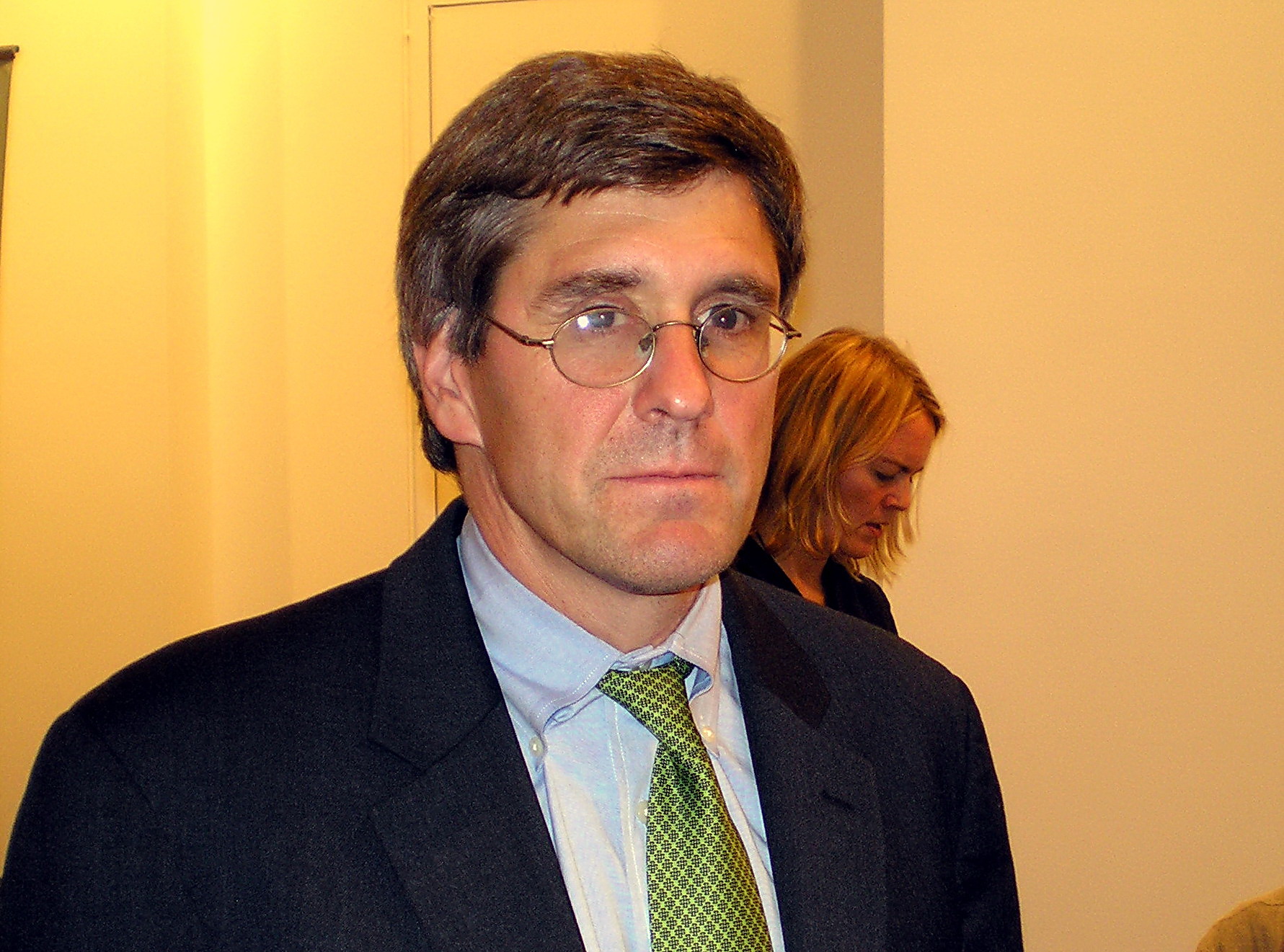
Saturday, March 19, 2011

"The Winning Ticket"


I'd like to announce that I will be cohosting a program on UKHD Radio with my friend Coco Konski. We'll be discussing Libertarian politics and personal liberty, for both American and British audiences. And the music the station broadcasts is excellent!